
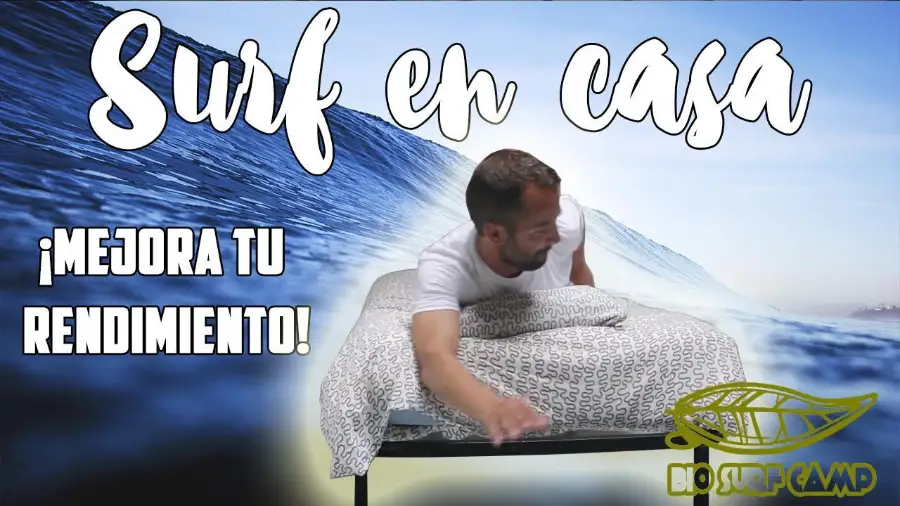
In this video tutorial, we will see 5 exercises to improve paddling if you are a beginner surfer.
Surf Exercises Out of the Water: Paddling in Surfing
Paddling in surfing is one of the most important factors to consider in our progression. It’s true that mastering the pop-up technique is essential to learning to surf, but if we can’t catch a wave by paddling, we won’t even be able to attempt it. That’s why our surf school has created a series of video tutorials focused on the key aspects of surfing.
In this video/article, we’ll learn how to improve paddling in surfing with 5 simple exercises. To help you follow along, we’ve prepared a guided video tutorial where Pablo demonstrates the exercises explained here over 10 minutes. We recommend doing this training three days a week, right before you start surfing. This way, you’ll notice a significant improvement in your performance once you’re in the water.
This training is designed both for beginner surfers planning to start soon and for experienced surfers who haven’t surfed in a while. We like to say it’s the best possible workout when you’ve been away from surfing for a long time or have never surfed before.
The exercises presented in this tutorial help improve coordination, increase peripheral vision on the board, achieve better paddling technique, and develop greater strength and intensity in paddling. Additionally, they help prevent muscle soreness during the first days of practicing in the ocean. Paddling in surfing uses muscles that typically aren’t worked in other sports, so it’s advisable to start training them before beginning to surf. This is important because during a surf camp, you have lessons every day and the soreness accumulates.
Performing the paddling exercises

The first thing we need to do is prepare the training area. To practice the exercises presented in this surf video tutorial, we only need two bosu balls on which we will place the surfboard. Bosus are rounded elements that simulate the instability of the sea’s movement. If you’ve never practiced this sport before, it’s likely you don’t have a surfboard or bosus. Don’t worry—in that case, it’s as simple as placing some cushions on the bed to gain some height compared to the mattress. Next, we’ll explain how to perform each of the surf exercises:
- Exercise 1. Maintain an upright position with your back slightly raised. Then, start paddling from as far forward as possible to as far back as possible. This way, you control everything in front of you: other surfers or anything that might cross your path. It’s important to make your paddling as wide as possible, since fewer strokes will help you move much faster.
- Exercise 2. The second exercise focuses on controlling your sides. While paddling, just like in Exercise 1, look and control the sides of the board. By making this simple neck movement, you’ll know if you’re well positioned on the wave or if you need to move to one side. Also, you’ll be able to see if there’s another surfer nearby who has priority on the wave. This exercise is very important for managing space in the water.
- Exercise 3. After doing the previous exercises and confirming you’re well positioned without bothering anyone, press your body completely against the board with your gaze downward. In this position, paddle harder to gain more speed. This can be very useful when you think you might lose a wave, as the extra speed will help you catch it. It’s important to have already glanced to the sides several times beforehand because with your head close to the board, it’s harder to be aware of your surroundings.
- Exercise 4. For this exercise, we focus on technique. The goal is to use the wrists more during paddling, rotating them while you paddle to reduce shoulder strain. This subtle movement often gets forgotten but adds extra speed. Also, keep your fingers close together so no water passes between them.
- Exercise 5. The last surf exercise involves shifting your position forward on the board or cushion, engaging more of your back muscles. This forward position allows a more frontal, deeper paddling motion, displacing much more water. This position creates greater speed but is a bit less stable in the water.
Ultimately, during surf sessions, we’ll mix these exercises. We’ll look for a combination of them all to substantially improve our paddling on the wave.
What we need to do is a progressive paddling stroke, from as far forward to as far back as possible, while controlling the sides and rotating the wrists. Additionally, we should know that if we move forward on the board and/or lie down completely, we generate an extra boost of speed that will help us catch many more waves.





0 Comments