

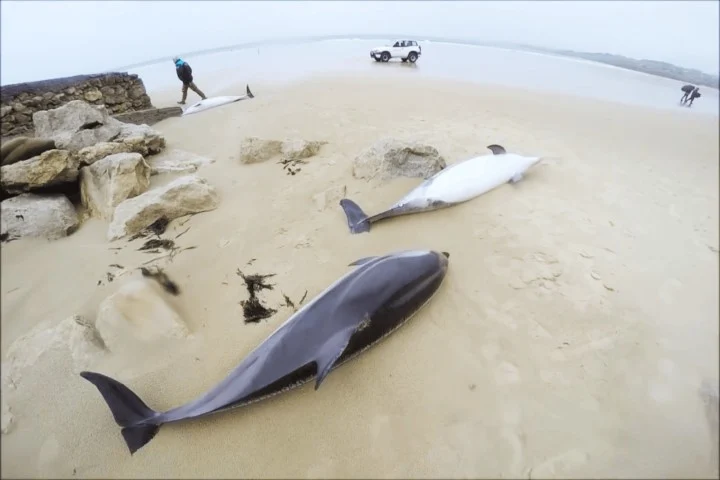
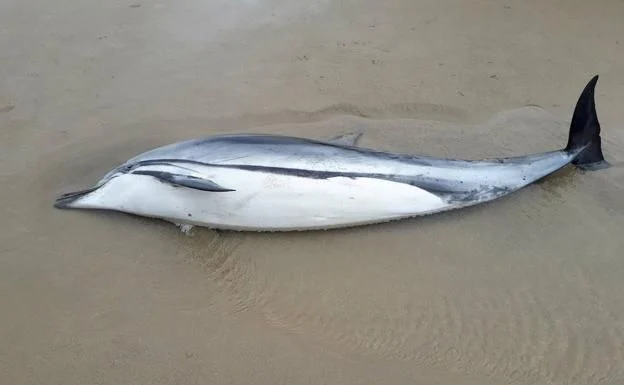
At Biosurfcamp, we are echoing the sad event that has occurred on our coasts in recent days. Last Saturday, May 18th, 14 striped dolphins were found dead on Oyambre beach, in the Cantabrian municipality of San Vicente de la Barquera. A true tragedy for the natural environment.
The 14 dead stranded dolphins appeared this morning on the beach of this municipality and were taken to the Wildlife Recovery Center for necropsies and an investigation into the causes of this terrible event. In addition, three more dolphins had to be brought back to open sea to prevent the same thing from happening to them.
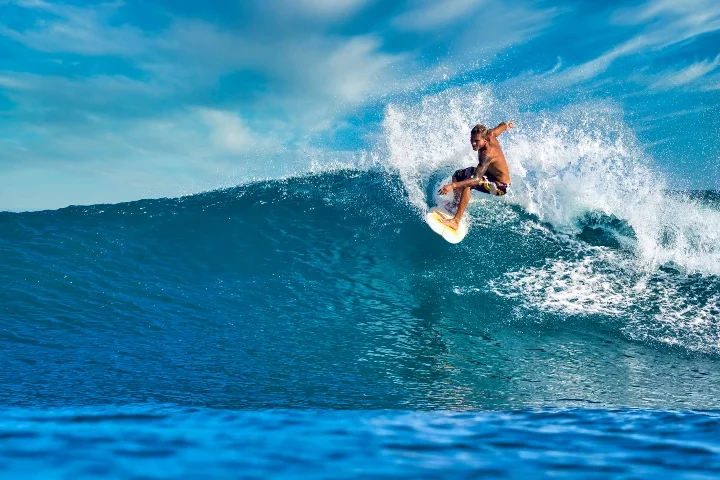
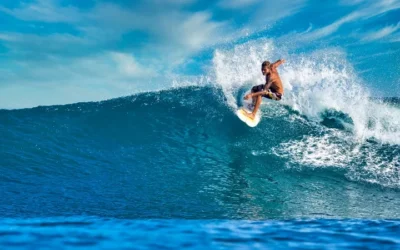
The operation involved veterinary staff from the Center, Natural Environment agents, and personnel from the Fisheries Directorate. They also had the help of several surfers who were surfing nearby to assist the surviving dolphins.
The striped dolphin
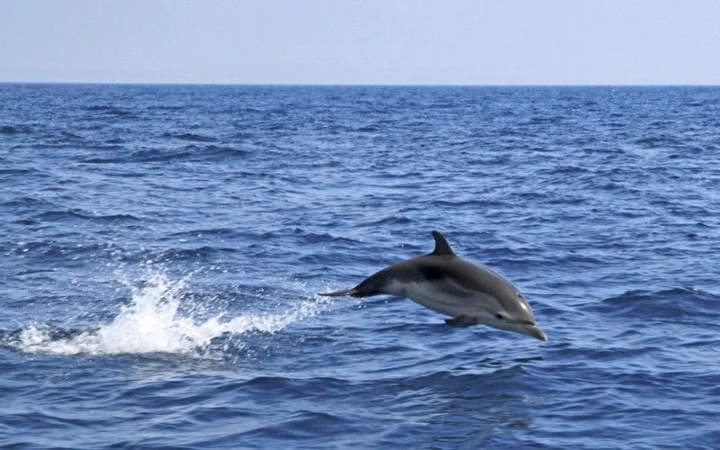
The striped dolphin is a type of cetacean that inhabits temperate and tropical waters throughout the world. It is typically one of the most common dolphins seen in the Mediterranean Sea, although they are also common along the Cantabrian coast. They grow to over 2 meters in length, and can measure up to 2.5 meters from tail to head. An adult striped dolphin can weigh more than 150 kilograms and live for more than 60 years.
They usually move in groups of 25, even exceeding 50 in the open sea. Their most distinctive feature is their bright dark blue color on the upper body, with two stripes running from the head to the caudal fin. The dorsal fin is entirely dark blue, while the rest of the dolphin is whitish.
Although they usually live in waters quite far from the coast, they tend to approach the coast during the spring due to the large influx of schools of fish. This means that most of the strandings of aquatic animals on the Spanish coast are of this species of dolphin.
The environment wants to tell us something
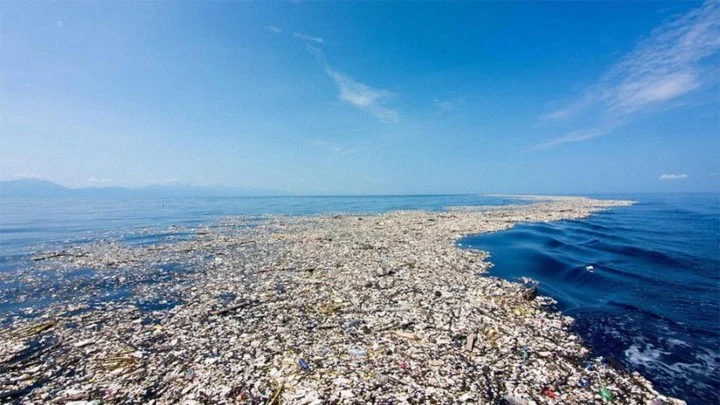
The environment is trying to tell us something, and it seems we don’t want to listen. We’re getting used to hearing news about natural disasters, and the biggest disaster is not giving them the importance they deserve. Therefore, we need to support the environment and seek a more conscious lifestyle so as not to denature the sea and the species that live in it.
Plastic seas, global warming, melting polar ice caps, and rising sea levels are problems we know exist, but which don’t seem to concern us until we stop to think about them or see images on television. These problems are leading to events like the one that occurred in Oyambre, and it must end. We must be able to do our part, because with everyone’s efforts, it is possible to achieve a more sustainable world that we can leave to our grandchildren.






0 Comments