


Waves are much more than a simple image of the sea in motion: they represent energy, nature, and, for surfers, a necessity. Without them, surfing wouldn’t exist. But do you really know what waves are, how they form, or what types exist? In this Biosurfcamp article, we’ll tell you everything: from the factors that create a wave to their different classifications based on the wind, the seabed, and the way they break. A complete review that will help you better understand the sea… and enjoy it as it deserves.
What are waves?
One of the most essential things for any surfer is waves, as there’s no surfing without waves. For this reason, at Biosurfcamp, we’ve created an article that covers everything you need to know about waves.
Waves are ripples that move across the surface of the water. These undulations that occur on the surface of the sea can travel for thousands of kilometers, growing in size. As we’ve already seen, it’s difficult to measure a wave, but we can say that the largest waves tend to form offshore, while waves that occur near the coast are usually smaller, although there are exceptions.
How are waves formed?

Waves are produced by variations in temperature and pressure in the atmosphere, not directly by the wind. Low-pressure centers, called depressions, and high-pressure centers, called anticyclones, give rise to air movements. The wind produced by these movements travels from places with higher pressure to those with lower pressure. The greater the pressure difference between one place and another, the greater the speed at which the wind moves.
The friction of the wind on the surface of the seawater forms small waves. As this friction increases, the size of the waves also increases, sometimes producing giant waves like those in the Nazaré canyon. Therefore, waves will vary depending on the strength of the wind, the length of time or persistence it blows in a given location, and the ocean area or fetch.
Types of waves. Different wave classifications
Next, we’ll talk about the different types of waves that exist. We’ve developed a series of wave classifications based on different aspects of each wave.
Waves according to the direction in which they break
The first classification of wave types is based on the direction in which the wave breaks. We must keep in mind that we mark the wave’s reference point in the water. In this classification, we have four types of waves:
Right waves

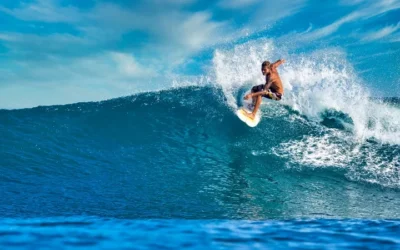
Right-hand waves are those in which, when surfed, we move to the right. These waves have a peak at the top, which breaks progressively toward that side. As we mentioned, if we were to take the reference from the beach, the wave would break to the left.
Left-wing waves

Left-hand waves are those in which, when surfed, we move to the left. These waves have a peak at the top, which breaks progressively toward that side. As with right-hand waves, if we were to take the reference from the beach, the wave would break toward the other side.
Peak
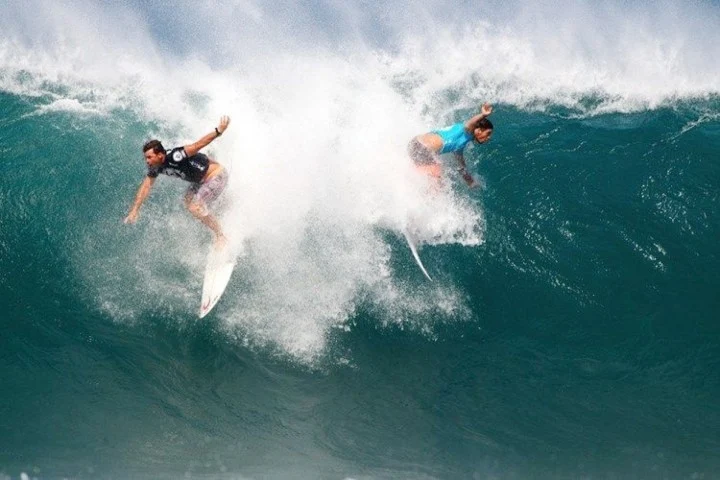
A peak, also known as a mixed wave, is a type of wave that breaks in both directions. If we’re positioned right on the peak, we can choose whether we want to ride the wave right or left. It can also be ridden by more than one surfer, each in a different direction.
Crash

A crash occurs when a wave breaks completely suddenly, meaning it has no wall and we can’t move in any direction. These are waves that don’t have a peak, but rather break their entire length at once.
Waves according to their place of formation
In this classification, we’re going to talk about where waves form. There are two types of waves:
Wind waves

These types of waves are produced by the effect of wind on seawater. They typically form close to the coast and in a short period of time, due to changes in gusts of wind. These are low-quality waves that tend to be small and unstable, often breaking quickly. Furthermore, these waves often come in combination from different directions, producing a very low turnaround time and making it impossible to surf comfortably. However, on certain beaches around the world, wind waves are good, as there isn’t as much swell as in the Mediterranean.
Swell waves
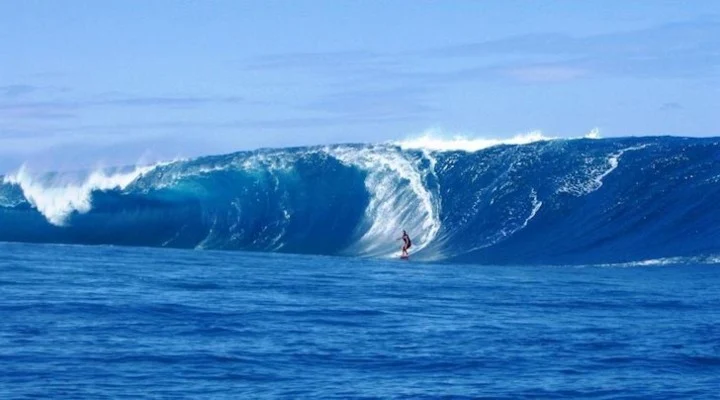
These types of waves are the highest quality and largest. They occur thousands of kilometers away from where they break and are unaffected by the wind. When they reach the coast, they usually have a longer duration and, therefore, are much stronger than wind waves. Furthermore, since they occur so far from the coast, it’s easy to check wave reports and forecasts to know when they will hit the beach.
Waves according to the type of seabed
As we mentioned in our article on seabeds, the type of seabed influences the type of waves that reach the shore. This is why there are three types of waves depending on the seabed at the beach:
Waves with a sandy bottom

The wave breaks on a sandy bottom. Sandy bottoms are less dangerous than rocky and reef bottoms, but they are more unstable. This means that waves are not always consistent over time, with constant changes depending on tides and currents.
Waves with a rock bottom
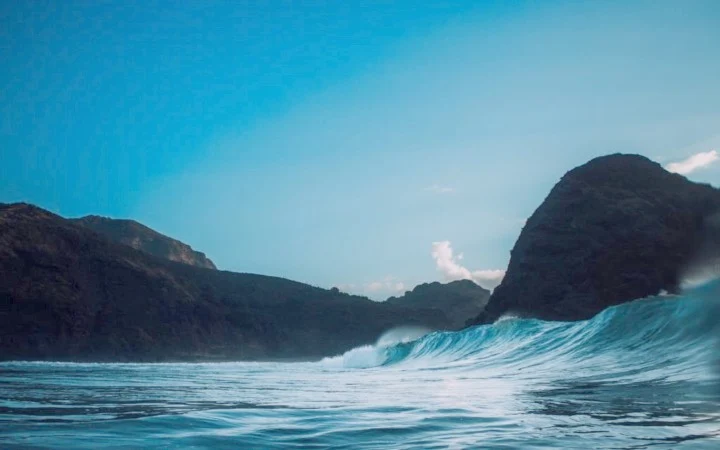
The wave breaks on a rocky or stony bottom. Rocky bottoms are very stable, as they barely fluctuate, resulting in very consistent waves with similar peaks. However, they are dangerous bottoms, as they are sharp and can only be ridden by experienced surfers.
Waves with a coral bottom
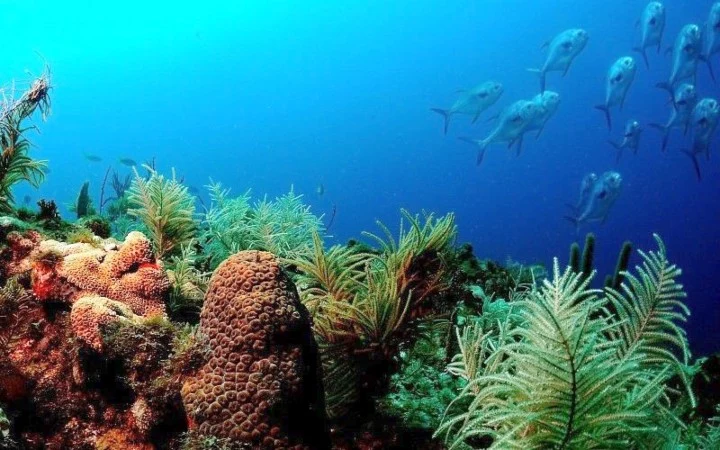
The wave breaks over a coral reef bottom. Coral bottoms meet the same conditions as rock bottoms. Coral is a living organism, with little growth, so it remains stable. It also has the advantage of being in more oxygenated waters, making it easier to see what’s underneath.
Waves according to their category
This classification refers to the types of waves according to their category and formation. There are four types of waves:
Oscillation waves
Oscillatory waves, also known as free waves, are those that occur when sea level fluctuates, forming on the surface. The seawater doesn’t move forward; it simply describes a small vortex in place as it rises and falls. They usually occur many kilometers from the coast, being the place where changes in sea level are most noticeable.
Translation waves
Transverse waves are those that occur when the sea advances and crashes against the seafloor, rising and shifting the surface. They usually occur near the coast, where the seafloor’s shifting is most noticeable. Furthermore, they tend to form a lot of foam when they break.
Forced waves
Forced waves are produced by the wind. They usually occur due to storms that form at sea. These waves are not usually very stable, and it’s difficult to predict what they will be like when they reach the coast, and they can be impossible to surf.
Seismic waves
Seismic waves, popularly known as tsunamis, are waves caused by earthquakes, volcanic explosions, and the movement of tectonic plates on the seafloor. These movements form large waves that move at high speed on the high seas. This great speed means that when they reach shallower seabeds near the coast, the change in pressure multiplies their size, producing waves of enormous size and force.
According to its shape when breaking
In this last category of waves, reference is made to the shape of the wave when it breaks on the coast.
Hollow waves

Hollow waves are those in which the crest of the wave extends beyond the base, forming a cylindrical shape inside. These types of waves are perfect for surfing, as they allow for quick standing and easy maneuvering.
Tubes
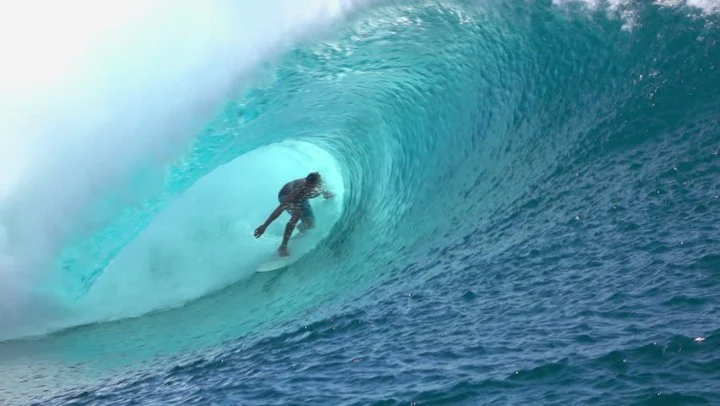
They’re a variation on hollow waves, where the top rises so high that it forms a tube inside. This type of wave is every surfer’s dream, as it allows you to ride the wave face completely surrounded by it.
Rolling waves

Rolling waves are those in which the base of the wave is further forward than the top. These are waves that often fail to break (or are all foam) and lack much of a steepness.
Shore waves

Shore waves are those that break very close to the shore, with little room to surf. They can be quite dangerous, as a drop-off lands directly on the bottom. Shore waves are perfect for other surfing styles, such as skimboarding.






0 Comments