
Longboard surfing is done with long, wide boards that offer plenty of buoyancy. This type of surfboard is especially useful for beginners, as it provides greater stability and makes paddling easier, allowing surfers to catch more waves. The board is much larger than the surfer, featuring a rounded nose since it doesn’t require a radical shape. The curvature of a longboard is almost nonexistent, which helps with smooth gliding on the waves, reduces resistance, and improves speed.
Longboards are generally considered to be boards that are 8’0″ to 9’0″ or longer. They are perfect for small to medium waves because their larger surface area allows greater speed compared to shortboards. This is a big advantage on days with few waves, enabling surfers to catch waves that shortboard surfers might miss. Longboarding is also a more relaxed style of surfing since it doesn’t involve sharp turns. However, you will need more wax on your board since you’ll be moving around more on it, and transporting these larger boards can be more challenging.
Longboarding is a return to the origins of surfing—the era of the Beach Boys and the “retro surf” style. Generally, surfers start with bigger boards and progressively move to smaller ones. In our surf courses, for example, we offer boards of various sizes, which students switch between as their skills improve. But in the longboard world, the goal isn’t to shrink your board; it’s to enjoy the calm and “float” on the waves.
These longer boards allow surfers to perform many unique longboard tricks, different from those done on a shortboard. Among the most notable is:
Knee Drop
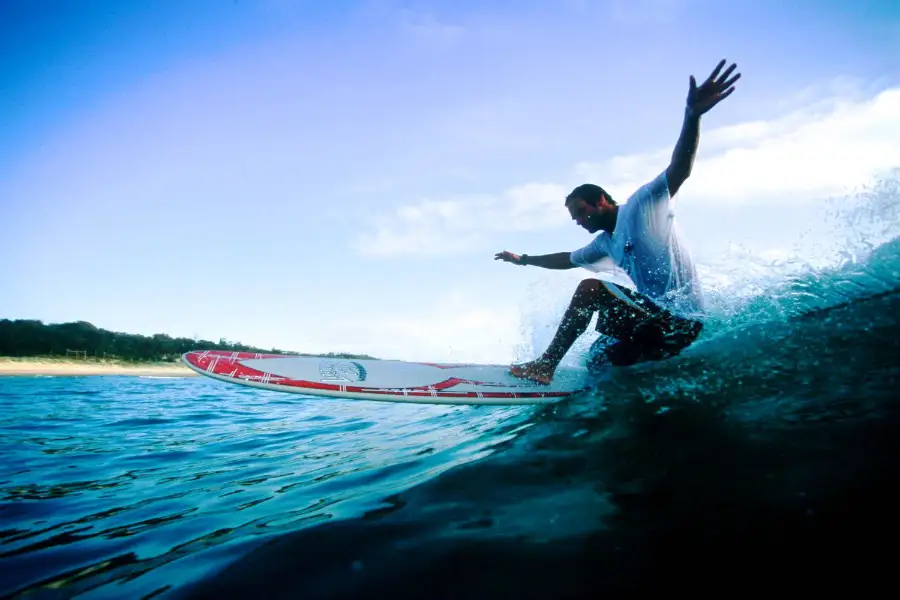
As mentioned, longboards are bigger and heavier, so making turns can be tricky. To execute a turn, you need to place your knee on the board and put all your weight on the back foot. From this position, rotate your hips so that the front part of the board begins to turn. Once the turn starts, shift your weight from the back foot to the front foot, completing a 180º turn.
The size of the longboard allows you to walk on the surfboard. Walking forward and backward on the longboard is a trick every longboard surfer should know. This maneuver creates the appearance of going up and down the board. To make it easier, you can slide your feet across the surface while stepping on the rails to maintain balance. As the saying goes, don’t try this at home (or on a shortboard, as you’ll likely fall).
Walking on the longboard
The size of the longboard allows you to walk on the surfboard. Walking forward and backward on the longboard is a trick every longboard surfer should know. This maneuver creates the appearance of going up and down the board. To make it easier, you can slide your feet across the surface while stepping on the rails to maintain balance. As the saying goes, don’t try this at home (or on a shortboard, as you’ll likely fall)..
Hang 5

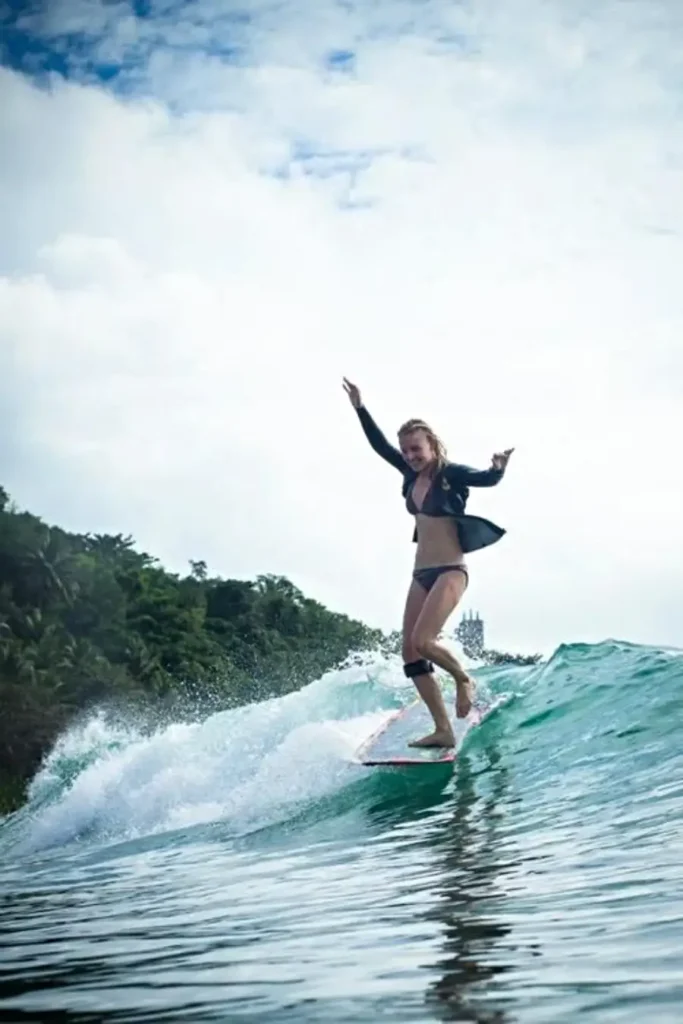
The Hang 5 is a type of maneuver where the surfer moves toward the front tip of the board. Once there, the front foot is slid forward until all five toes hang over the nose of the board. Meanwhile, the back foot is positioned near the center of the board, bearing most of the surfer’s weight. This stance makes it easier to exit the maneuver smoothly.
Hang 10

One of the most complex maneuvers among all longboard surf tricks. Similar to the Hang 5, the surfer positions themselves at the nose or tip of the surfboard. In this case, the surfer extends both feet beyond the tip of the board—that is, all ten toes. As you can imagine, this demanding maneuver requires extra skill and speed on the wave to pull off successfully.
Coffin
The Coffin, also known as the coffin maneuver, consists of lying completely flat on your back on the longboard. To make this transition, the surfer must lie down in a “dead man” pose, as if inside a coffin, slide along the wave in this position, and finally get back up. Although it may seem simple, it’s important to lie down gradually to avoid putting too much weight on any one area of the longboard.

Noseriding
In this maneuver, the surfer moves toward the tip of the board. Once there, they can perform other tricks like the hang 5 or the hang 10. Beginner surfers will make this movement by taking small steps or sliding along the length of the board. More experienced surfers approach the nose using the cross-step maneuver.
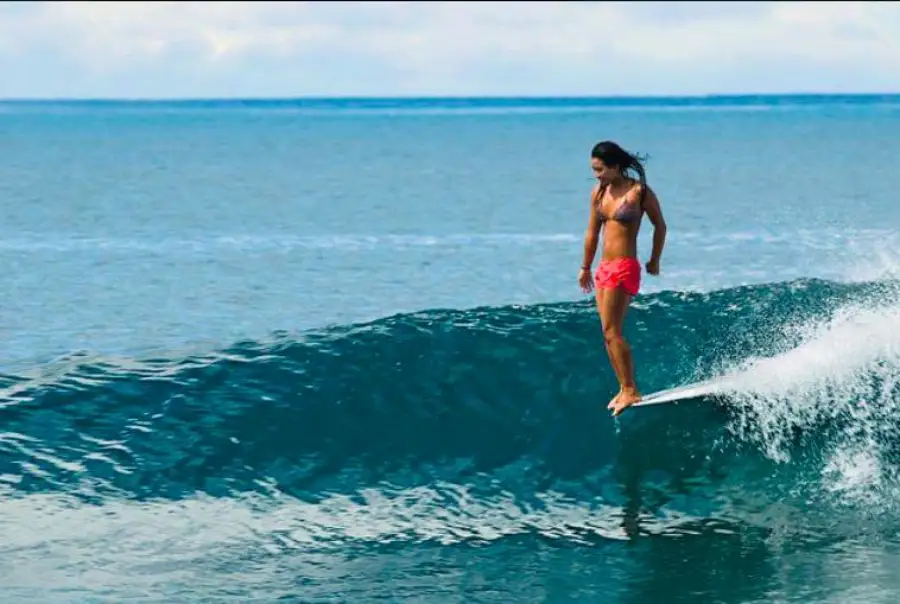
Cross-step
This maneuver is a variation of the Nose Riding. The Cross-step, as its name suggests, involves walking toward the tip of the board by crossing the legs instead of taking normal steps. Therefore, you reach the nose of the board by making “a series of X’s” with your legs.










0 Comments