Surfing and waves are two concepts that go hand in hand and are difficult for us to separate. However, it is possible to “surf” in calm water or even without any liquids available. Many people aren’t fortunate enough to live near the ocean or visit beaches often.
This is one of the reasons why some brands have designed electric boards for gliding across rivers or lakes, as well as coastal areas with little waves. Gyms are also increasingly offering classes using surfboards that simulate the movement of the sea. And why not, we can practice some surfing exercises in our own home to prepare for the moment when we can get back into the ocean. We’ll explain everything here!
Surfing tutorials at home with Biosurfcamp
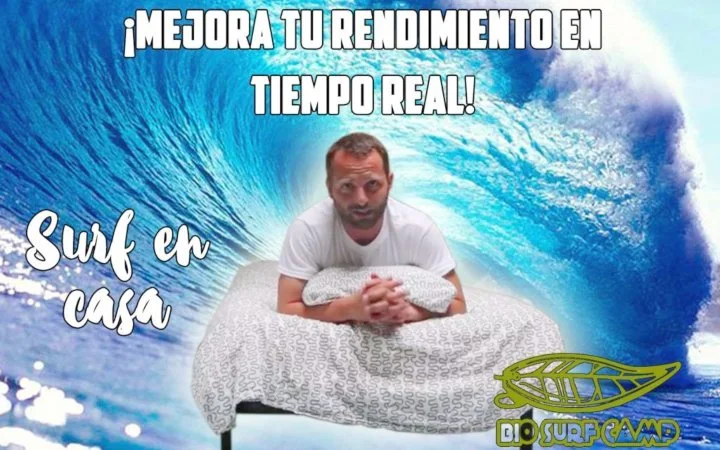
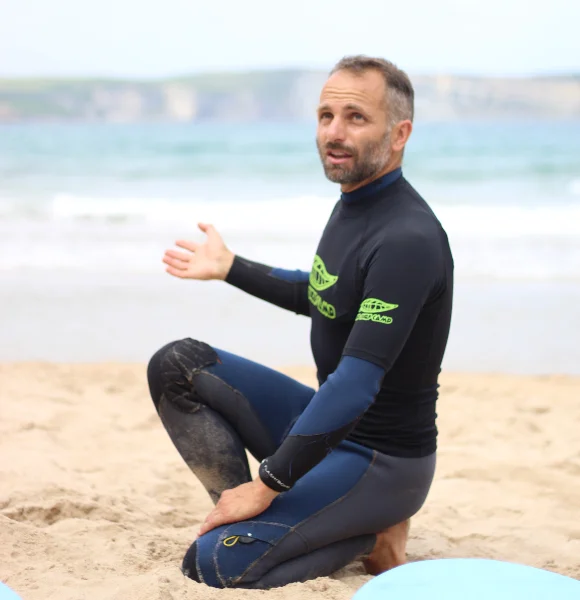
On our YouTube channel, we have a multitude of videos in which our colleague Pablo explains some surfing exercises we can do at home. These exercises serve as preparation for the surf season, promoting acclimatization for the sport. The most interesting thing is that they can be performed with our board and bosús, as well as with cushions and our own bed. The variety of possible exercises is immense, and each one will focus on a specific aspect of surfing: how to stand up, beginner exercises, how to paddle… Here are some examples:
- How to lie properly on a surfboard: We’ll learn the ideal way to lie on a surfboard. This position is directly related to paddling efficiency and proper standing. It’s the beginning of surfing, the basic and essential starting point for beginning the exercise.
- When should we stand up on a wave?: We’ll learn the ideal time to stand up on a wave. We’ll study the most common situations that occur on the board when we’re beginners and that can complicate our standing up. We’ll look at the most common mistakes and learn why it’s the perfect time to do it.
- Standing up in three steps: Standing up on the board is the most important point in surfing, as proper execution of this technique will determine whether we can surf correctly and perform different turns, tricks, or rotations. At our school, we work on standing up in three steps.
Surfing as a fitness sport in the gym
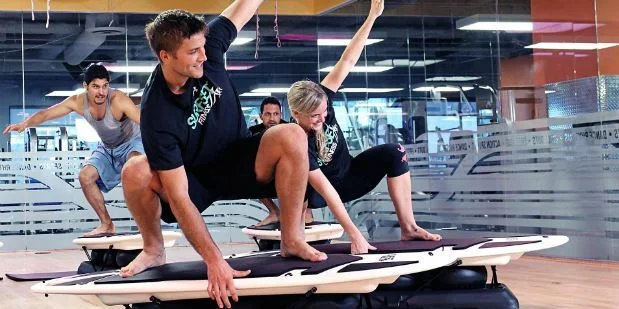
You don’t need a beach, waves, or water. The Surfset is a surfboard created by American former professional hockey player Mike Hartwick, who patented a system for functional training from the gym. It arrived in Spain a couple of years ago, although it’s not yet available in all provinces.
The Surfset method combines classic fitness with surfing. It takes place on a board, but without water. According to the official distributor in Spain, “the user works with their own body weight and instability to tone, but it also helps prevent injuries and strengthen joints.” There are four programs:
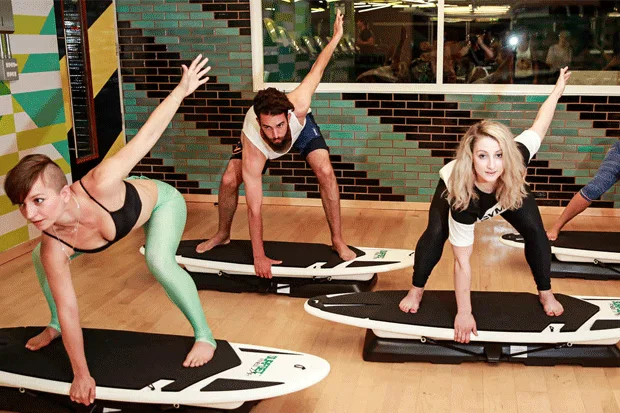
- Balance: Connecting the body and mind through balance. It works the muscles to maintain body balance and provide stability and firmness to the spine, which is why it is widely used by yoga and Pilates enthusiasts.
- Burn: Focuses on building good aerobic capacity and burning fat through fast-paced exercises and high-intensity sprints. A toned body is also achieved through exercises and movements that require the mobilization of muscles from all parts of the body.
- Build: Focuses on body strength and definition. A strength and definition workout from the core of the body.
- Blend: Cardio, strength intervals, and surfing. The goal of this program is to maintain a high pace by mixing in slow interval sequences.
Electric surfboards

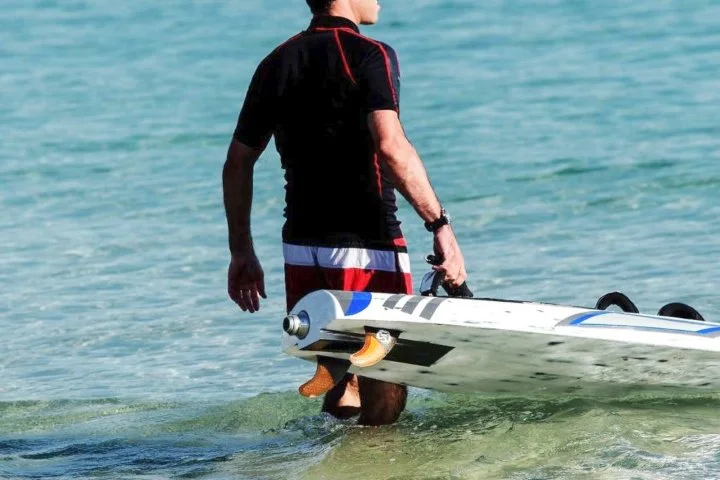
Known as ‘jetboards,’ they are surfboards with a built-in electric motor that allows you to glide across the water at high speeds thanks to a wireless remote control. They are similar in size to windsurfing boards, but their battery and turbine embedded in the bottom mean they are independent of waves or wind, allowing them to reach speeds of up to 30 kilometers per hour. This power mimics the sensation of being pushed by waves during a surfing class.
They are lightweight, safe, and intuitive and can be used on lakes, beaches, rivers, or reservoirs, even on shallow surfaces. The board’s speed is controlled by a pressure sensor. More pressure equals more speed. The bottom has an electric turbine, which allows gliding and is environmentally friendly. The Basque company Onean is one of the companies that designs and manufactures this type of board in Spain.





0 Comments