

Diego Santos: “Surfing can be a great ally for tourism and attract a multitude of visitors”
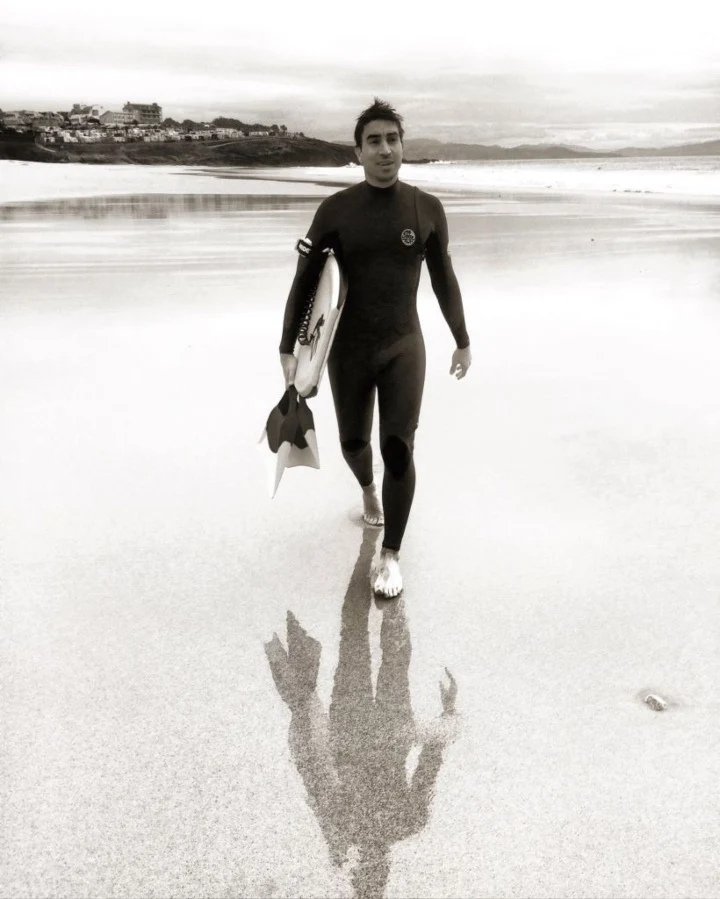
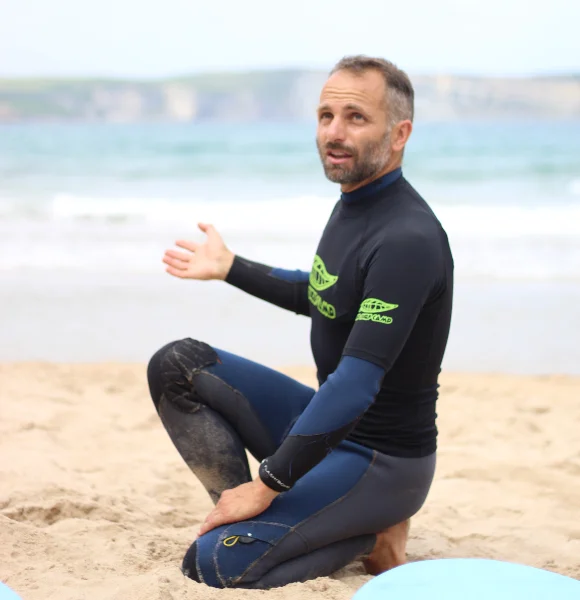
His two passions came into his life practically at the same time. And he decided to unite them. Diego Santos was born in Pontevedra, although he didn’t start surfing until he moved to Madrid to study Sociology. That summer, he entered the ocean with a board for the first time and became interested in everything that surrounds the sport: the travel, the routines, and the way of life. He enjoyed a scholarship to study in Asia, which made everything click in his head. Surfing and tourism would then become the center of his daily life. You can find more information about his experiences on his blog www.mareasvivas.surf
Biosurfcamp: Your love for surfing began when you started studying sociology. Over time, you combined the two disciplines. What’s the relationship between the two?
Diego Santos: I’m from Pontevedra and moved to Madrid to study for my degree. That same year, in the summer, I started bodyboarding. From that moment on, I would escape to the beach whenever I could. And this sport became one of the most important pillars of my life. I don’t know if it was because of the influence of what I was studying, but I started to notice people who surfed. Their conversations, their routines, their travels… Everything related to surf culture. I also worked on projects related to the sport during some courses. When I finished my degree, I completed a master’s degree and started a doctorate. That’s where I focused my thesis on surf culture and went on an internship with the Spanish tourist office to Singapore. There I discovered the world of tourism, and everything clicked. While there, I also had the opportunity to travel and experience a tropical environment. When I returned to Spain, I fully immersed myself in my thesis again and focused it more on the relationship between surfing and tourism. Since then, I’ve collaborated with surf festivals and some media outlets. I now also teach at the Ostelea business school, The School of Tourism & Hospitality, specializing in tourism, on the Madrid campus.
Biosurfcamp: Surfing, then, is more than a sport and involves many aspects of the lives of those who practice it.
Diego Santos: Yes, it’s a culture. It’s a long way down the line and has many nuances. I try to convey that idea in my classes and on my blog. Although right now, due to work, I don’t have much free time and can’t update it as much as I’d like. In that space, I present ideas I’ve covered in my thesis and also talk about more controversial topics, such as tourism campaigns centered around surfing, which, in my opinion, haven’t been organized properly, or the need for regulations on some beaches where there’s overcrowding.
Biosurfcamp: Does surfing contribute more to tourism or tourism to surfing?
Diego Santos: It depends on the area, but depending on the coastal areas, I think surfing is a perfect tool for tourism development if done wisely. Unfortunately, there are many places where there is no planning, it becomes a jungle and ends up harming tourism.
Surfing can be a great benefit in attracting visitors. For example, a small town that doesn’t have major tourist attractions but has good beaches can take advantage of that to encourage visitors. This will be positive as long as it’s well-organized and not overcrowded.
When can it be negative? Well, for example, if you take a beach that’s known for having bathers all summer long and, without regulation, you add a bunch of surf schools. A conflict arises between bathers and surfers.
To make this compatible, a good management system and political involvement are necessary. There are areas of Galicia where a huge amount of money has been spent promoting this type of tourism, bringing surfers through competitions, and implementing too many activities that weren’t appropriate for the area where it was developed. This may be due to poor advice. Because what works in Ferrol, for example, doesn’t necessarily work on Lanzada beach. All the characteristics of each location must be taken into account. Replicating models doesn’t always work.
Biosurfcamp: Was bodyboarding more common then than now? Does the rise of schools influence the choice of other types of boards?
Diego Santos: La elección tiene también un factor económico. A finales de los años 90, había una gran diferencia entre el precio del material para bodyboard y el de tabla corta. En mi zona, hace unos años, estaba muy equilibrado el número de personas que practicaban uno u otro. Pero, con el paso de los años y el surgimiento de las escuelas de surf, con las que ya no hace falta comprar el material, los principiantes pueden elegir una modalidad u otra sin miedo a perder dinero. Los medios de comunicación y el marketing también han influido en que cada vez haya más gente que se decante por la tabla corta, porque es a la que más visibilidad dan. Canarias es uno de los pocos sitios donde sigue habiendo una fuerte tradición de bodyboarders.
Biosurfcamp: What type of board do you think is most appropriate for beginners?
Diego Santos: I think shortboards can be more complex to use when you’re a beginner; not everyone is capable of enjoying a wave in a short amount of time if they choose to ride it. It depends a lot on the individual; some people get the hang of it right away, while others may be less agile and take several days to get the hang of it. With a bodyboard, it’s easier to enjoy it from the start. It also depends on each person’s confidence, how comfortable they feel… Everyone is different.
Biosurfcamp: What are the differences between surfing in the Cantabrian Sea and going to more distant places, like America?
Diego Santos: There are some fantastic surfing areas very close to us. I think it’s a mistake to think that the further away we go to find waves, the better they’ll be. Even people who aren’t yet very proficient go to places with dangerous seas. This becomes a risk, both for them and for those in the water. The initiation stage is very important. Once you’re independent, everyone will make their own decisions, but you must have a solid foundation. As for destinations, it’s true that warm water is a privilege. In Cantabria, in summer, it’s a pleasant temperature. But in Galicia, it’s always very cold. The entire Cantabrian region is ideal for surfing. In addition, there are other positive factors such as the landscape, culture, and gastronomy.
With this last question of the interview with Diego Santos, we say goodbye.





0 Comments