We’re sharing this article we prepared for ASAG Informa magazine, published by SOMOS, an association in Astillero focused on disability issues.
Surfing can’t be defined solely as a sport, and while calling it a full-on life philosophy might be a stretch, the truth is it doesn’t fit neatly into the mold of traditional sports. Its natural appeal draws in a wide range of people with very different abilities. Every summer, many overcome laziness, shyness, or other barriers to hop on a board and crown their holidays with an experience that’s both authentic and special.
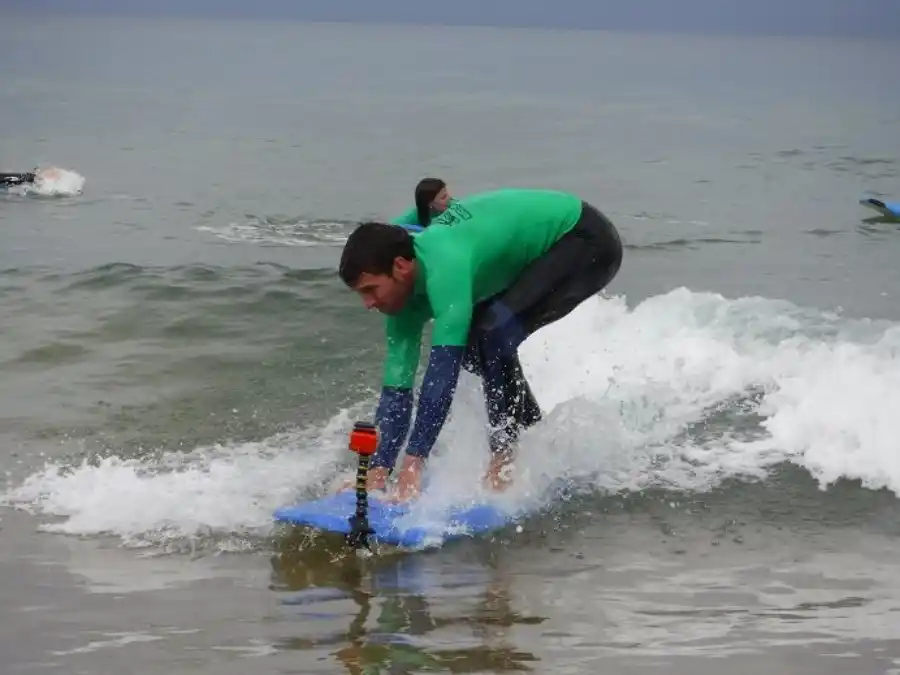
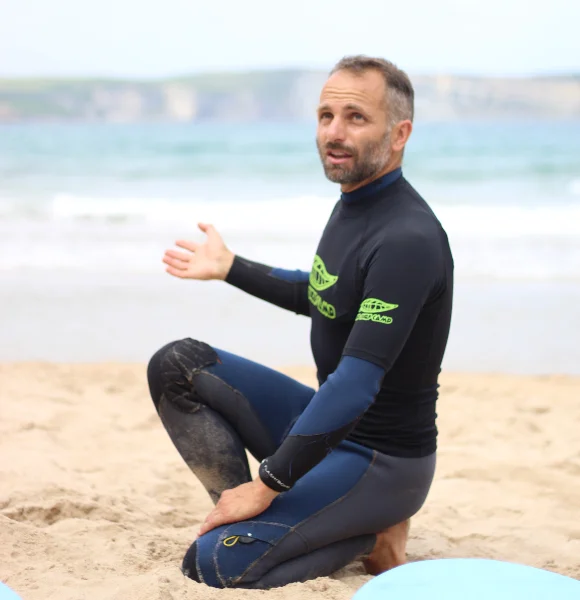
At Biosurfcamp, we’re not chasing trophies or trying to train future champions in a sport that’s set to become Olympic in 2020. What we truly aim for is that anyone — regardless of their condition — gets to enjoy being in contact with the sea and live the incredible experience of surfing, with the hope that people who feel more connected to their surroundings will help protect a better future.
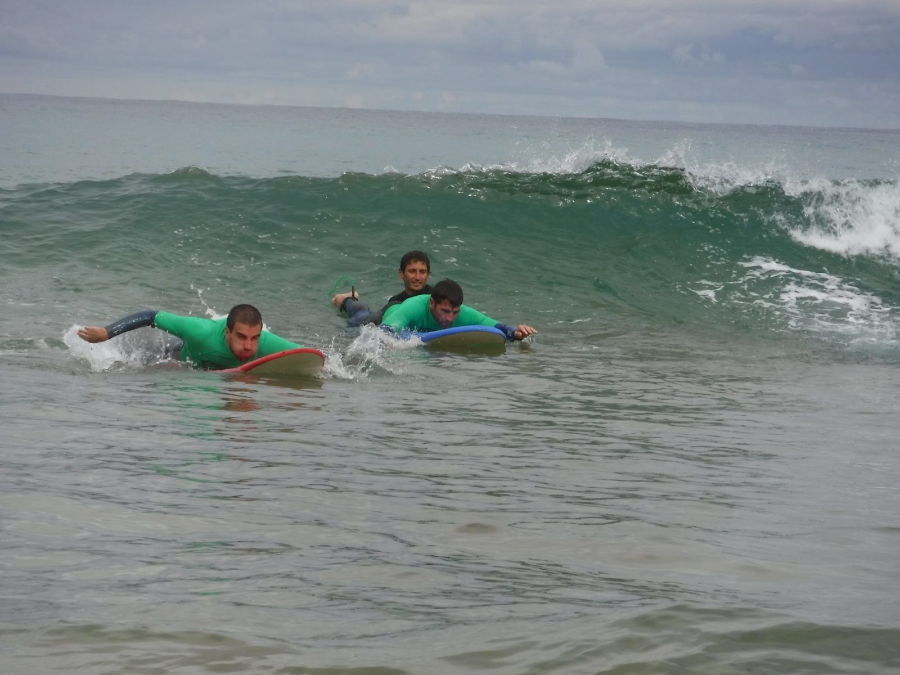
We started this project 7 years ago, and since then, we’ve worked to welcome people of all ages and abilities to give surfing a try. In our surf courses in Suances, we’ve had participants from 6 to over 60 years old, of all body types and physical conditions, giving their all to ride waves and sharing unforgettable moments of surf and good company.
When someone starts feeling frustrated or comparing themselves to others, we shift gears and go deeper — helping them focus on surpassing their own limits. That’s the real reward. The norm here is people having fun, pushing themselves to improve, sharing emotions, and ultimately feeling an incredible urge to come back.
With this philosophy, when opportunities have come up to work with groups of people with disabilities, it’s been a natural fit. The work flows just like it does every day — only with a bit more attention to certain technical details
Adisli Association
After developing and refining several ideas on how to properly adapt a conventional surf course for groups with special needs, we were lucky enough to put them into practice when we were joined for three days by 15 young people from the Adisli Association in Madrid. As a reward for a full year of school and occupational workshops, they came to enjoy some amazing days in Suances, where we shared intense sessions of surfing, cycling, walks, and an excursion to the intertidal zone. Despite being a very diverse group, what they all had in common was their incredible enthusiasm and energy in the face of this new challenge. In the words of their coordinator, Juan Pablo Fernández, “it was a great experience for the kids.” A unique surf camp experience for children with disabilities.
With a deeper awareness of the limits we also find among the general public — and without forcing any situation toward a specific outcome — we focused on accompanying each participant through the courageous adventure of entering the sea on their surfboard, attempting to catch a wave and experience that incredible moment of gliding over it — lying down, on their knees, or standing.
Another inspiring and truly surprising experience we’ve had over the years was the visit of a blind surfer to our surfcamp, accompanied by his friends from Buitrago. We had the privilege of guiding this remarkable man through his first waves. No less than José Luis García-Serrano “Jota”, the blind paratriathlon world champion. He gave us an unforgettable lesson in trust, communication in the water, calm, joy, and personal growth — riding several waves powered by the strength of his other senses and abilities, supported by our small acoustic cues and instructions.
As he described his experience: “It’s an incredible sport that demands a lot of concentration and is where I feel most independent… it’s a direct connection with nature and the sea, and it’s absolutely amazing.”
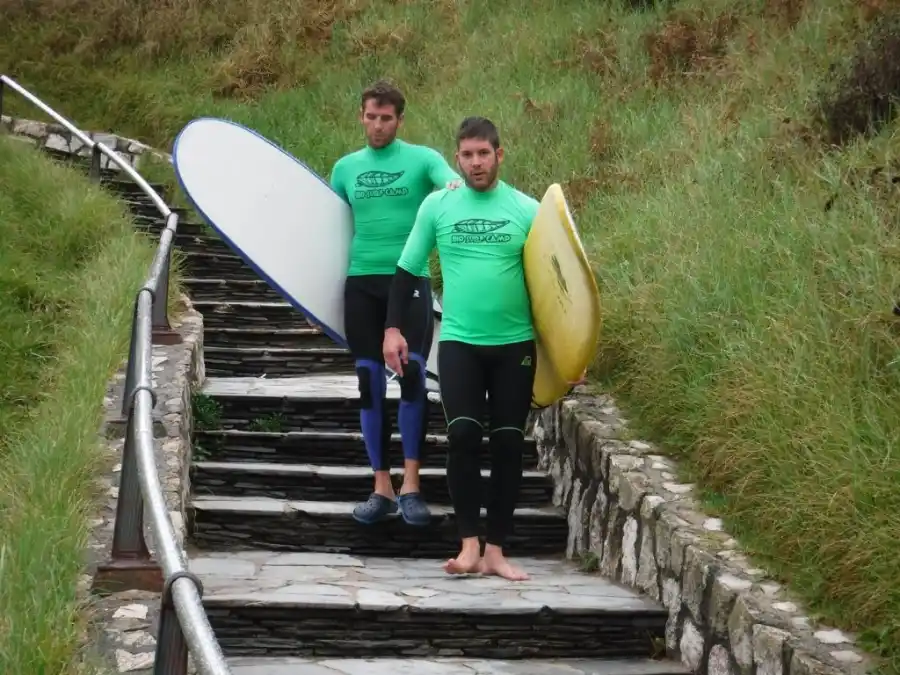
After our work with different groups and individuals with disabilities, Isabel García from the Gimbernat-Cantabria Schools of Physiotherapy and Speech Therapy (affiliated with the University of Cantabria) invited us to share this experience in a specialized course for students of physiotherapy and speech therapy. In this course, the students themselves became surf instructors for a day, working with children affected by various disorders.
The activity, titled “Surfing as a Therapeutic Tool for People with Disabilities,” was coordinated by the author and Nuria Martín, a specialized physiotherapist and lecturer. The goal was to highlight the benefits and unique qualities of water as a new environment rich in sensory stimuli. Surfing served as the medium to work on balance, coordination, concentration, and body awareness, as well as to enhance decision-making in children with Autism Spectrum Disorder (ASD) and Attention Deficit Hyperactivity Disorder (ADHD).
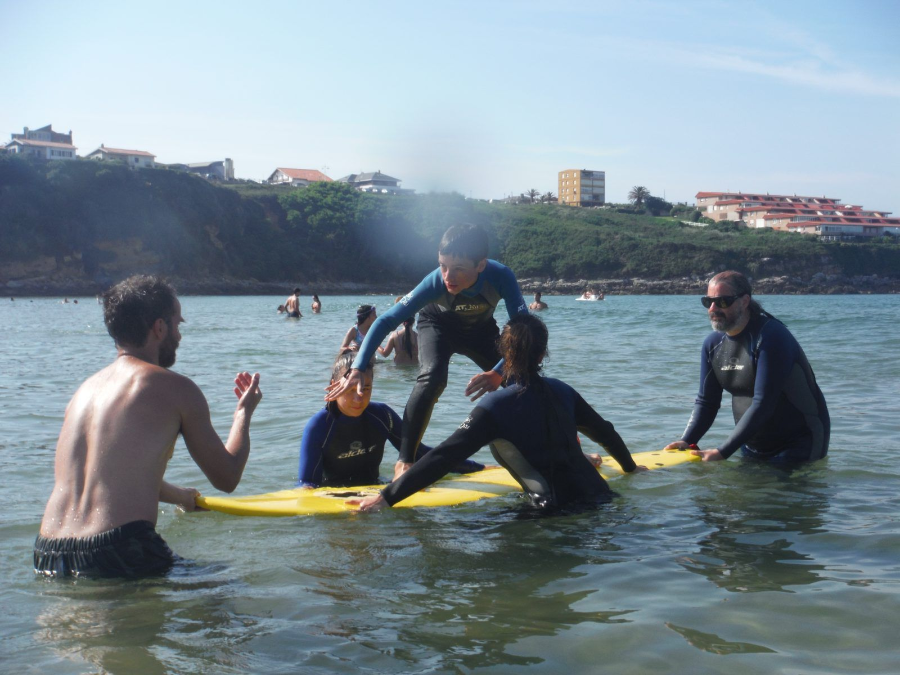
This unforgettable activity was carried out in collaboration with several young participants from Amica. The involvement of our first-time instructors was just as remarkable, as the kids with various physical and intellectual disabilities fully embraced all the adapted exercises we had prepared — both on land and in the real waves.
In this way, our university students not only enjoyed their own first waves but also experienced a joy reserved for true instructors: the satisfaction of guiding others through their first unforgettable moments on a surfboard.
Irene Gurrea, the coordinator of the activity from Amica, expressed her appreciation for the opportunity we offered, noting that “it’s always positive for them to enjoy new experiences.”
Reflections
Living these unique moments with people who, at first glance, might seem destined to miss out on one of the most exciting and dynamic experiences in connection with the sea — surfing — has led us to reflect on just how much physical or intellectual limitations only become real to the extent that a person believes they are. This, we feel, is closely tied to what their immediate environment (family, friends, neighbors, peers, therapists, institutions…) believes about them.
We’ve seen the deeply positive effects that surfing brings to everyone we’ve worked with: improvements in mood, self-esteem, physical abilities, balance, concentration, socialization, and more. We’ve also seen the incredible potential in those surrounded by people who believe in them, trust them, and support them — regardless of their condition.
All of this leads us to say that if a person with a disability doesn’t dare to take on challenges like surfing, it may also be because their society suffers from a kind of disability. The entire environment is also called to overcome itself, to understand that every human being comes into this world with extraordinary capacities for adaptation and resilience in an ever-changing world. Surfing is one of the most powerful expressions of that kind of environment — and a great metaphor for life.
If a person is able to enjoy surfing, their whole environment has also succeeded — and, like we instructors do, can share in the joy of that deeply personal and authentic accomplishment.
And with that, we leave just one message of encouragement for anyone who has felt the call of the waves, the board, and the sea:
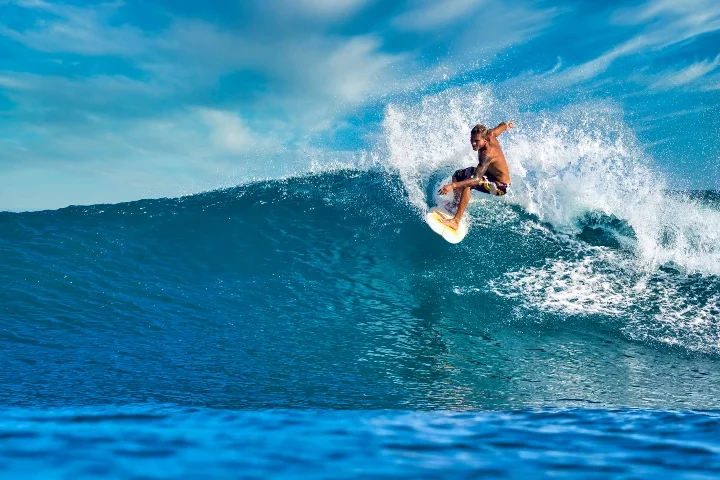
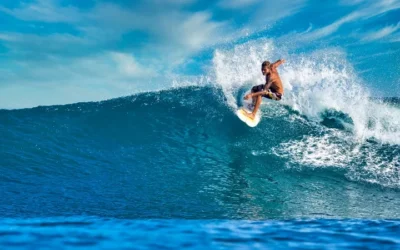
There is something truly fascinating waiting — the feeling of riding your first wave, at dolphin speed, in perfect harmony with the vast ocean.


0 Comments