
The eternal question that plagues all surfers these days is: should we use grip or wax on our surfboards? What are the advantages and disadvantages of each of these elements? Where can we purchase these products and receive advice on how to apply them?
More and more professional surfers are opting to use grips on their boards instead of applying wax. Perhaps more due to advertising sponsorship and fashion than effectiveness. Even so, wax has been (and always will be) one of the basic surfing materials for lovers of this sport. There are many brands, types of wax and grips, as well as places to find them. Therefore, at Biosurfcamp, we will try to analyze both options and the reasons behind choosing each one. We will also discuss the compatibility of these two grip elements on our boards.
Paraffin for surfing
Paraffin or wax is a basic compound for surfing at all levels, both amateur and professional. It is a surface-applied product used to prevent slipping on the board, that is, to increase grip once in the water. There are many types of this product, as it has been on the market for a long time.
The finish on surfboard materials is hard and slippery, thus increasing the board’s glide on the water and improving speed. However, this reduction in friction makes standing up much more difficult. Therefore, in the 1930s, natural waxes began to be used to improve the board’s grip.
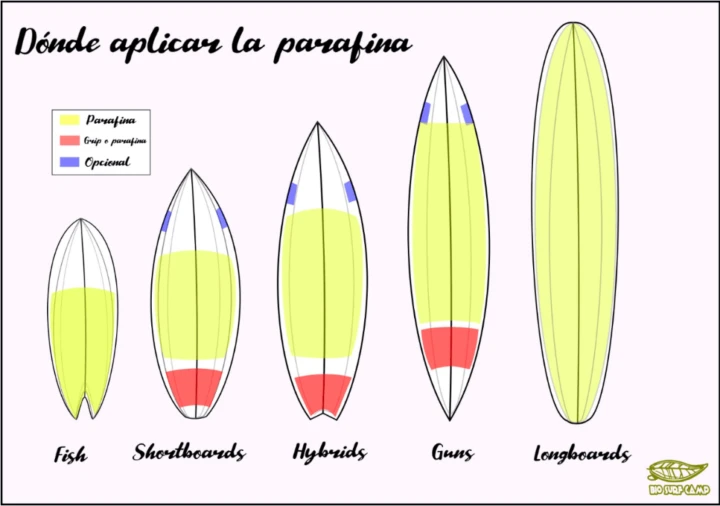
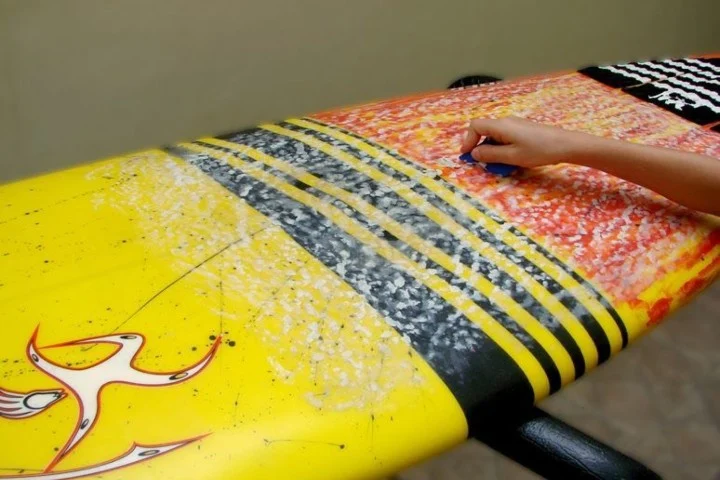
Furthermore, paraffin is applied differently depending on the type of board chosen for surfing. On longboards, it is applied to the entire deck because tricks involve walking along the board. On bodyboards, it is only applied to the rails, the area where we grip with our hands. On most types of boards, it’s applied up to the top half of the board, where the front foot is placed, since it’s not necessary any further forward.
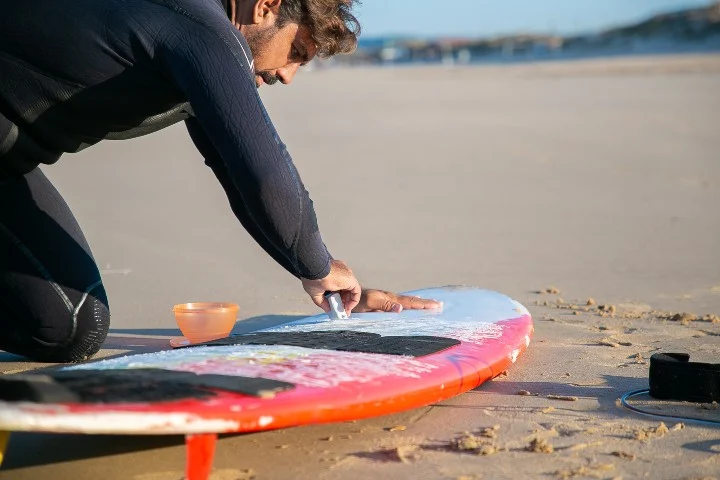
In short, to apply wax, we must cover the areas of the board where we will place one of our feet at some point during the surf. To apply it, it’s common to make “X” shapes across the surface, thus completely covering the footholds. It’s also common to use a comb to grate the wax and spread it along the board.
Just as there are many brands of surf wax, there is also paraffin wax that is applied according to water temperature, as is usually indicated on each brand’s packaging. The choice should be based on the water temperature where we usually surf, or where we will be surfing at that time. The most common brands of paraffin wax, both for amateur and professional surfers, are usually the same: Sexway, Mr. Palmers, Sticky-Bumps, and they can be purchased online or in specialty stores.
Advantages of using paraffin
- Due to the variety and development of brands, we can find a variety of types, and each one will suit us depending on the situation we’re going out to catch waves in.
- They’re easy to find, and the great advantage is that if one isn’t practical or effective for us, their cost is low, and we can always change the brand or type of paraffin.
Disadvantages of using paraffin
- We must take great care of our board and clean it often, as it must be applied to a completely clean deck.
- Wax should not be applied over previous wax residue, as this will cause a loss of adhesion.
- Also, some surfers believe that waxing can make the board look dirty.
The grip for surfing
Also known as a pad, this is an accessory that attaches to our board (usually the tail, although they also exist for the nose). It’s mostly made of foam or cork, improving our stability and grip in the water. As with paraffin, there are many types of grips depending on the board we choose to surf. The development of these products has also changed over the years, with countless brands and features available to suit our style.
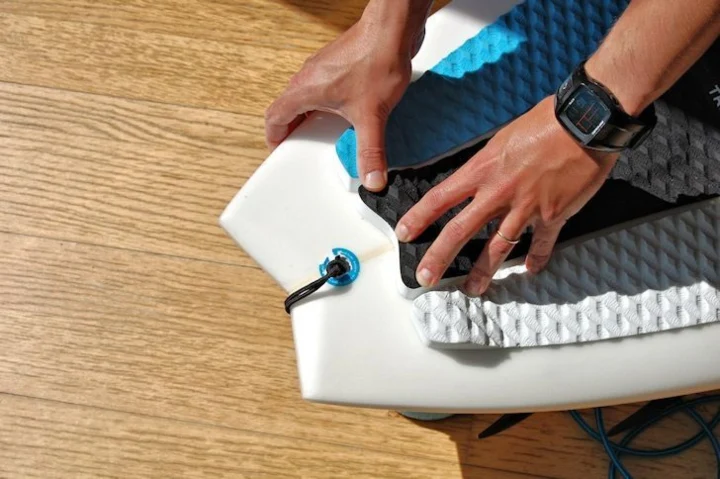
Installing a grip on your board is relatively simple, although you must follow a series of guidelines to ensure it is applied effectively and doesn’t hinder your surfing experience. The board must be clean and free of paraffin or wax residue. Before applying it, it’s a good idea to test it without fully applying it to see how it will fit the board, as it must adapt to the position of your back foot when you stand up from the board. Once it’s applied and adhered to the board, it’s advisable to let the grip dry for 24 hours. By following these steps, it’s ready for practice.
Many grips have already been manufactured according to the tail shapes of each type of board. They each have their own shape and technical components: the width and type of grip for fish or performance boards; the heel, which is the raised part of the grip at the end for better foot conditioning while surfing a wave; and the bridge, which is located in the middle and serves to make us aware of where our foot is positioned at all times and helps us move forward during flat maneuvers. Many professional surfers are starting to use grip all over the board, not just the rear.
Advantages of using the Grip
- We’ll never have to soak our board in paraffin again, as it’s a great substitute.
- Maintenance is very simple, and if you’re a beginner, it can be a great way to learn how to position your foot once you’re standing.
- The grip has a raised area that prevents your back foot from going too far back.
- In addition, many professional surfers soak their grips in paraffin to further increase grip.
Disadvantages of using the grip
- They are substantially more expensive than paraffin.
- Sometimes, when the front pads are applied, they can cause chafing in the rowing position.
- Once applied, if they don’t work well in the water, we’ll have spent around €30 on something we won’t use again.
Where to buy paraffin or a grip
Nowadays, it’s very easy to find both accessories online on generic product sales sites like Amazon and eBay, although they can also be purchased on surf-specific websites, such as Mundo-Surf or Victory Surf Shop.
They can also be purchased at brick-and-mortar sports stores, such as Forum or Decathlon. In addition to having a wide variety of products and being relatively affordable, they’re ideal for those who don’t want to invest a lot of money and/or are just starting out.
However, you might be best advised at a dedicated physical surf shop, contacting professionals who sell surf products. They can give you some advice on the grips and waxes that are commonly used and best suited to your board.
Ultimately, these items are used by all surfers, whether amateur or professional, as they are vital for improving stability in the water. Some opt for wax only along their board, others for the grip, although most surfers use the hybrid option with grip on the back and wax on the front, to improve grip and be as comfortable as possible on their boards.












0 Comments