

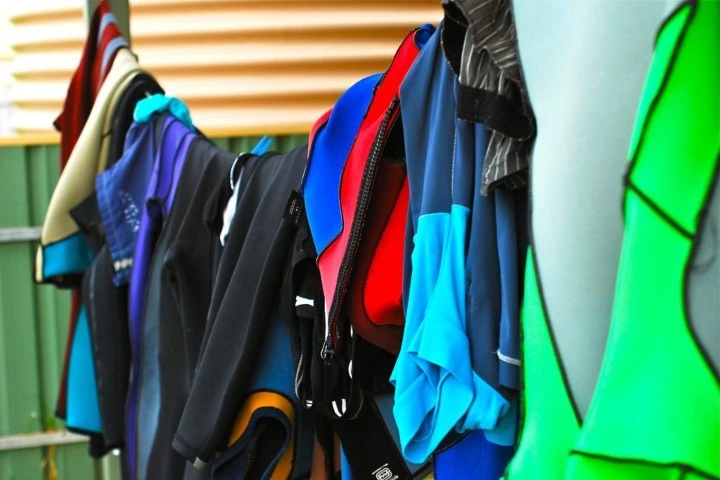
In addition to choosing the perfect wetsuit, it’s also important to know other things, such as how to put it on correctly or how to fix small tears in the fabric. Did you know that besides surfing, there are other sports that require a wetsuit? Here we’ll tell you everything.
Neoprene according to its thickness and length
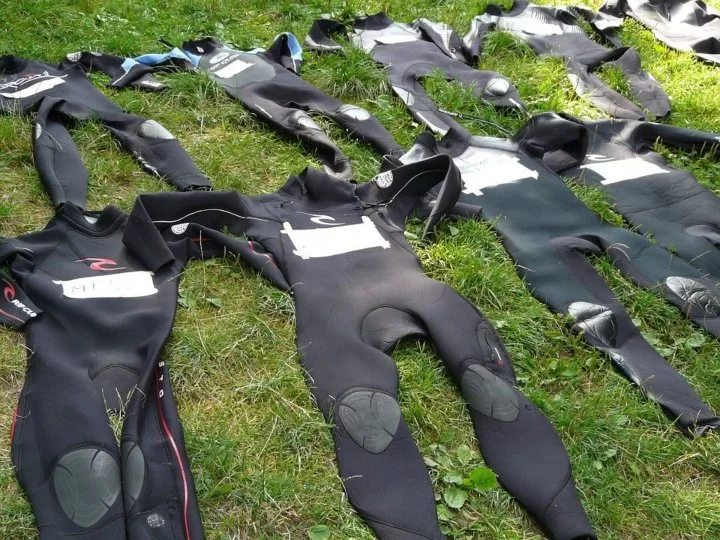
The thickness of wetsuit neoprene can range from one to six millimeters. Although it may seem like a small difference, every millimeter makes a big difference when we’re in the water. The thicker the wetsuit, the more protected we’ll be from the cold. But it’s not all advantages, because it’s also more difficult to move and be comfortable in a very thick wetsuit. It’s common for a single wetsuit to have different thicknesses because several sheets of neoprene are used to make it.
The chest, back, and legs are usually thicker because they don’t require as much movement and to maintain warmth in those areas, while the arms and shoulders are thinner for comfortable paddling.
Water temperature is the determining factor in determining the wetsuit’s thickness and length. Here’s a fairly reliable classification of the type of neoprene based on that temperature:
- 23ºC or higher: Neoprene is not required.
- 21ºC to 23ºC: 1mm neoprene bodysuit with swimsuit.
- 18ºC to 21ºC: 2mm shorty wetsuit.
- 17ºC to 18ºC: 2mm wetsuit, sleeves and legs can be long or short.
- 14ºC to 17ºC: 3/2mm longsuit.
- 12ºC to 14ºC: 2mm to 4mm longsuit, with the option of neoprene booties.
- 10ºC to 12ºC: 4/3mm longsuit, with neoprene booties and gloves.
- 8ºC to 10ºC: 5mm to 3mm longsuit, with neoprene booties, gloves, and cap.
- 8°C or colder: 6 to 4 mm wetsuit, with neoprene booties, gloves, and a cap.
For these reasons, it’s recommended to own a 3/2 or 4/3 full-length wetsuit, which can be used in almost any sea. On other occasions, it may be worth traveling with your board and renting a wetsuit from a local surf school.
Neoprene according to its seams
The seams of a wetsuit will determine how much or how little water enters. The most basic wetsuits usually have flat seams that allow a fair amount of water to pass through. Mid-range and high-end wetsuits, however, use a system of gluing and blind stitching, which involves gluing the edges of the different neoprene pieces and then stitching them along one side without penetrating the fabric. This prevents water from passing through the hole. Finally, high-end wetsuits have seams sealed with a special rubber that provides complete insulation.
According to the closure: with or without zipper

Most commonly, wetsuits have a back zipper, which simplifies putting them on. However, they are also made without this type of closure. This second type requires the entire body to be inserted through the neck, which is made of a very flexible material that stretches as much as necessary to fit. The main advantage of zipperless wetsuits is that, since they don’t have a zipper, less water gets in. However, they are more uncomfortable to put on and take off. In surf schools, zippered wetsuits are common, as they adapt better to different people.
Add-ons
There are neoprene accessories to protect your feet, hands, head, and chest from the cold.
- Neoprene booties are boots that, in addition to protecting you from the cold, are very useful for walking on rocky or volcanic bottoms.
- Neoprene gloves and caps are very useful for protecting against the most intense cold.
- Bibs are similar to neoprene vests and protect you from the cold when the water is not cold enough to wear a wetsuit.
How to put on the wetsuit

Getting into a wetsuit correctly can sometimes be a challenge. If it’s wet or doesn’t have a zipper, it’ll be even more complicated. Here are some tips to make the task easier:
- Lubrication: Using lubricant on specific areas of your body can be very helpful. If you apply it to your knees, shoulders, and neck, the suit will glide more easily over your skin and you’ll spend less time putting it on. It’ll also prevent chafing while you swim, and once you get out of the water, you’ll be able to take it off without any problems. Don’t use petroleum jelly, as it can damage the material; use a product specifically designed for neoprene.
- Cover your feet: If you wrap them in a material, such as a plastic bag or your own sock, they’ll slide more easily inside the suit and you’ll spend less time putting them back on.
- Gently pull up: Once your feet are in position, stretch the wetsuit little by little, pulling the fabric from the bottom and working up as it becomes perfectly stretched. Position the knee pads correctly at knee level and continue until you have your arms inside. If you try to do it from the top and pull, it will be more difficult and you risk tearing it.
- Before closing the zipper, make sure it is perfectly snug and that there are no creases at movement points, such as the knees or elbows.
- Zip it up without help. Learn to do it yourself in case you ever want to go surfing and no one is available to go with you.
- It should be snug to keep water out, but you should feel comfortable and have freedom of movement.
- If you haven’t used it for months, it’s important to moisten it before using it. If it’s too dry, a strong tug can easily tear it.
How to repair the wetsuit
Taking care of your wetsuit is necessary, but don’t think that just because you get a small tear in the wetsuit means you’ll have to throw it away and buy a new one. These types of wetsuits tend to be expensive and are intended to last for several years. Here’s how to repair small holes to extend your suit’s lifespan:
- You’ll need liquid neoprene (which you can purchase at any surf shop) and a scrap of leftover neoprene. Some brands include a small piece next to the label. If not, you can cut it from an old wetsuit or ask a surf shop for one. You’ll also need a piece of paper to prevent the fabric from sticking together and a toothpick to spread the liquid.
- Place the paper inside the wetsuit, at the level of the tear. Use the toothpick to apply the liquid neoprene around the hole or tear and sew it together.
- Once it’s completely dry, turn the wetsuit inside out, cut the scrap to a size that covers the entire tear, spread liquid neoprene over it like glue, and place it over the hole.
- Place something heavy on top to apply pressure and ensure it adheres completely.
- Once dry, it will be completely glued and ready to use again.
- You can also use neoprene contact adhesive. This glue is spread on both surfaces, left to dry for 10-15 minutes, and then pressed together for several minutes.
What other sports use neoprene?
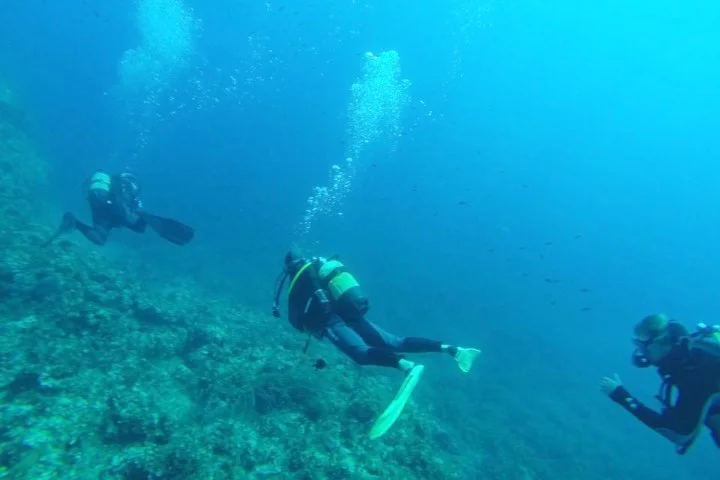
Surfing isn’t the only sport in which its practitioners use a wetsuit. It also has slight variations depending on the activity:
- Lined wetsuits: Lined on the outside and microporous on the inside. This is the typical wetsuit for spearfishing.
- Lined wetsuits: Provides durability and is easy to put on and take off. The outside is smooth. It facilitates hydrodynamics and is durable. It is used in swimming and windsurfing.
- Double-lined wetsuits: Typical wetsuits for surfing. They are lined inside and out.
- Unlined neoprene surf suits: Made of only neoprene. These are the most elastic and delicate. These are specific suits that burn in the sun and degrade faster than those with an outer lining.
- Triathlon-specific suits: These highly elastic and comfortable suits prevent neck chafing and are quick to put on and take off. They also help with buoyancy and reduce contact with the cold of open water.










0 Comments