

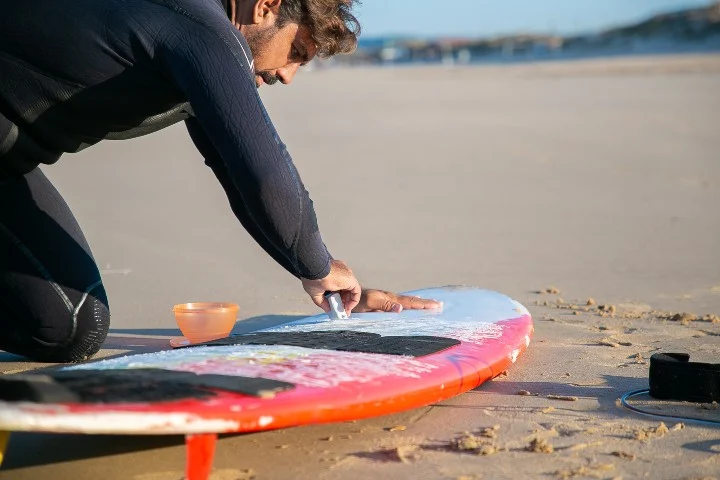
You don’t need many things to start surfing. A surfboard and a wetsuit are enough to begin, although there are many other surfing accessories that can enhance the experience. Despite needing few physical items, two of the most important elements for surfing don’t depend entirely on us: good weather and a beach with waves suitable for our skill level.
The question we ask next is clear:
Where are the best beaches in the world for surfing located?
The decision to select the best beaches in the world for surfing has sparked great debate. Every surfer has their favorite beach, depending on their preferred wave style, skill level, desired conditions, and personal feelings. Therefore, creating a definitive top list of the best surfing beaches is difficult, as it relies heavily on individual subjectivity.
At Biosurfcamp, we gathered to analyze our favorite surfing spots and compiled this Top 10 Best Beaches in the World for Surfing. To create the best guide to surf spots, we included locations from different continents and conditions. Each beach on the list is described in detail, explaining the reasons for its selection.
Our collection features some of the most famous beaches with the best conditions worldwide, recognized by the sport’s most renowned figures. Many of these beaches are located in paradisiacal settings that seem straight out of a movie, but others are within easy reach of our boards — and perhaps we haven’t even noticed them.
The beaches are not listed in strict order since, as mentioned, it’s very difficult to choose one over another. The order reflects the votes of our Biosurfcamp team.
1. Pipeline, Hawai, USA
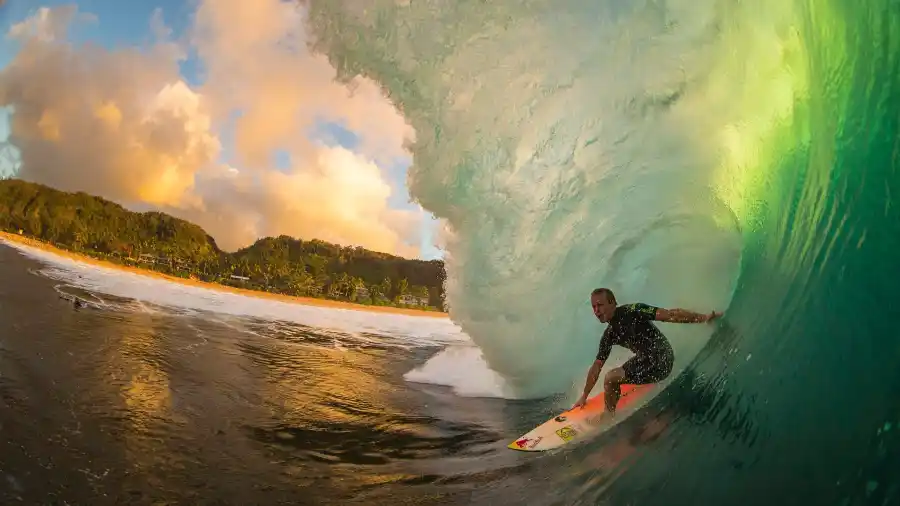
Pipeline Beach is located on the island of Oahu in Hawaii (USA). It is one of the birthplaces of surfing, with continuous surfing beginning in 1961. Along its nearly 11 km of coastline, you can find perfect waves for expert surfers, thanks to the quality of its swell period and its beautiful barrels. However, it is not recommended to enter this beach if you are not yet skilled with the board, as its massive waves combine with a shallow coral reef bottom.
As we have discussed in other articles about seabeds, a coral reef bottom can cause deep cuts and painful impacts. Due to this dangerous seabed, numerous fatal accidents have occurred at this beach. Therefore, it is considered one of the most dangerous waves in the world. The coral reef bottom lies on a volcanic reef with many peculiarities. The rock has numerous sharp edges and deep cracks, making any fall very risky.
2. Supertubes, Jeffreys Bay, South Africa
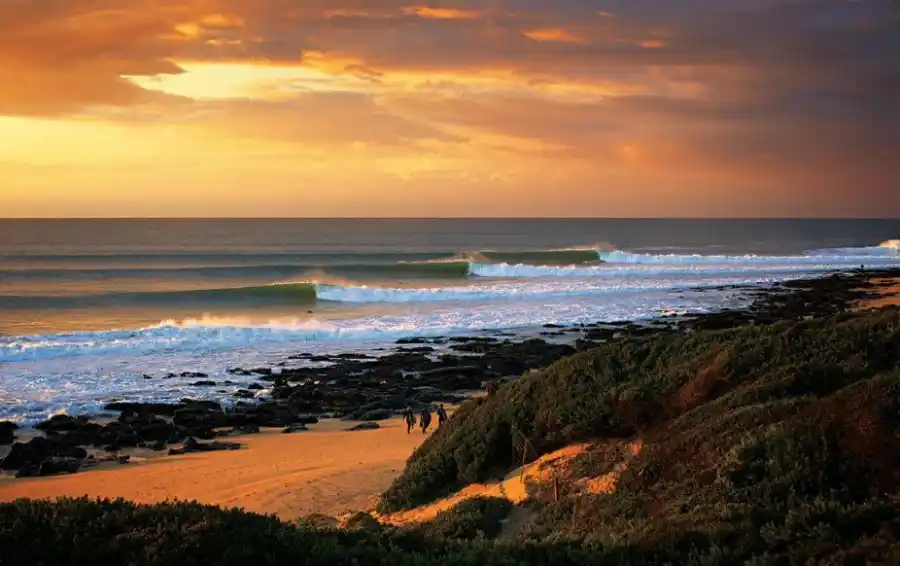
We move to South Africa, to Jeffreys Bay, where Supertubes Beach is located — home to one of the best right-hand waves in the world. Supertubes is truly one of the world’s top surfing beaches, and its name fits perfectly. It offers long sets of right-hand waves with lengthy barrels that often reach all the way to the shore. Surfing here began in 1964, and it was quickly included in the world tour competitions.
Near the main Supertubes beach, there are several breaks suitable for different skill levels. This makes it an ideal spot for a multi-week surf trip, as you can experience various wave styles within just a few kilometers. The same goes for the beaches of Suances in Cantabria, which feature different orientations and types of waves. Additionally, it allows surfers of varying levels to travel together and share a unique experience.
3. Superbank, Gold Coast, Australia
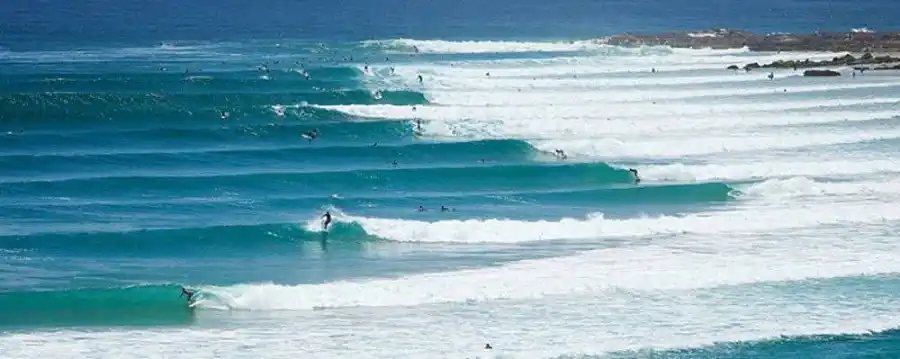
One of the places where surfing has become especially popular in recent years is Australia, home to the longest wave in the world. The breaks at Snapper Rocks, located on Australia’s Gold Coast, form an unbeatable succession of spots for any surfer. Among them, the Superbank wave stands out the most, reaching over 500 meters on its best days.
The Superbank is an “artificial” wave created in 1999 when a large amount of sand was moved to prevent navigation at the mouth of the Tweed River. This event transformed the wave into one of the best surfing beaches in the world. Before 1999, the Snapper wave here was quite mediocre and unstable, breaking abruptly and unpredictably. Today, it is considered one of the best right-hand waves globally.
Additionally, within this unique cluster of breaks on the Australian continent, other nearby waves like Kirra and Duranbah also attract attention.
4. Zicatela, Puerto Escondido, Oaxaca, Mexico
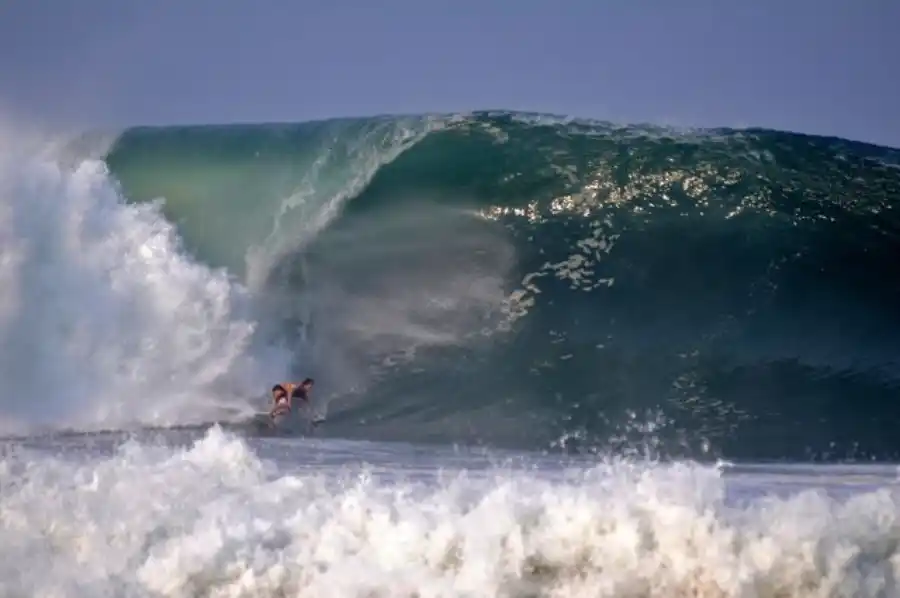
Zicatela Beach is one of the most powerful beaches with the best waves in Mexico. This unique spot is located in Puerto Escondido, in the state of Oaxaca. Along its nearly 3 kilometers of shoreline, the beach offers a series of tall, powerful waves. It is one of the highest waves in the world and the tallest in the Americas.
The beach was discovered by Californian surfers, who nicknamed it the “Mexican Pipeline” due to the quality of its waves. The beach is quite dangerous because of its strong currents. If you’re just starting to surf, you can watch the professionals enjoying this wave or head to La Punta, located on the southern side of Puerto Escondido Bay. This more secluded beach offers smaller, more accessible waves suitable for surfers of all levels.
5. Mavericks, Half Moon Bay, California, USA
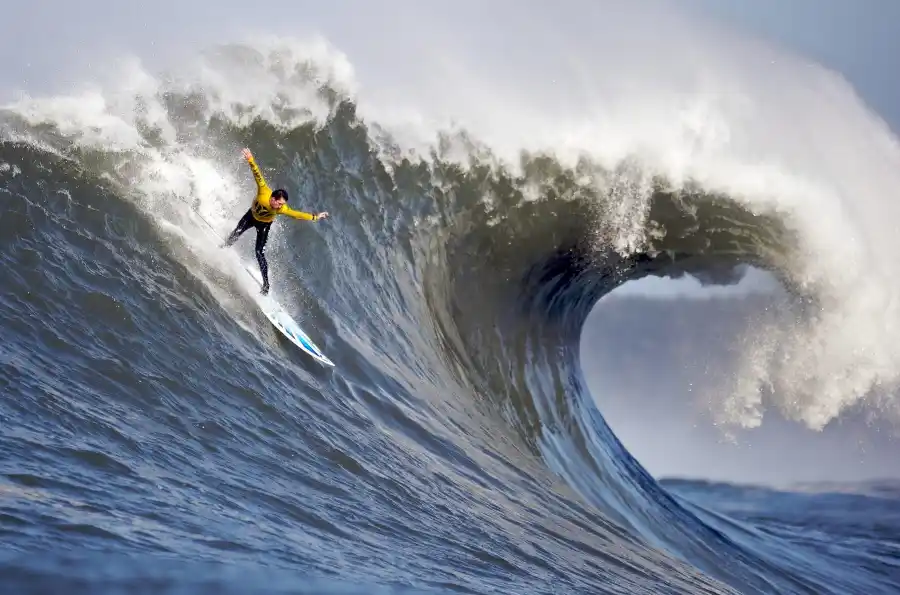
One of the largest waves in the world, stretching nearly 400 meters and reaching heights over 30 meters on days of intense storms. This wave, located at Half Moon Bay just 30 minutes from San Francisco, is one of the giants of the surfing world. It is a wave only suitable for big wave surfing professionals. Its discoverer, Jeff Clark, was the pioneer who first surfed it, and over the years many brave surfers have also attempted it.
This is one of the most famous waves worldwide, known both for its location and for starring in one of the most famous surf movies ever made, “Chasing Mavericks” (2012). The film tells the legend of Jay Moriarty, a 15-year-old boy who dreams of surfing the biggest waves on the planet. Spain also hosts a big wave competition, La Vaca XXL, held at the Bocal Cliffs in Cantabria.
6. Mundaka, Basque Country, Spain
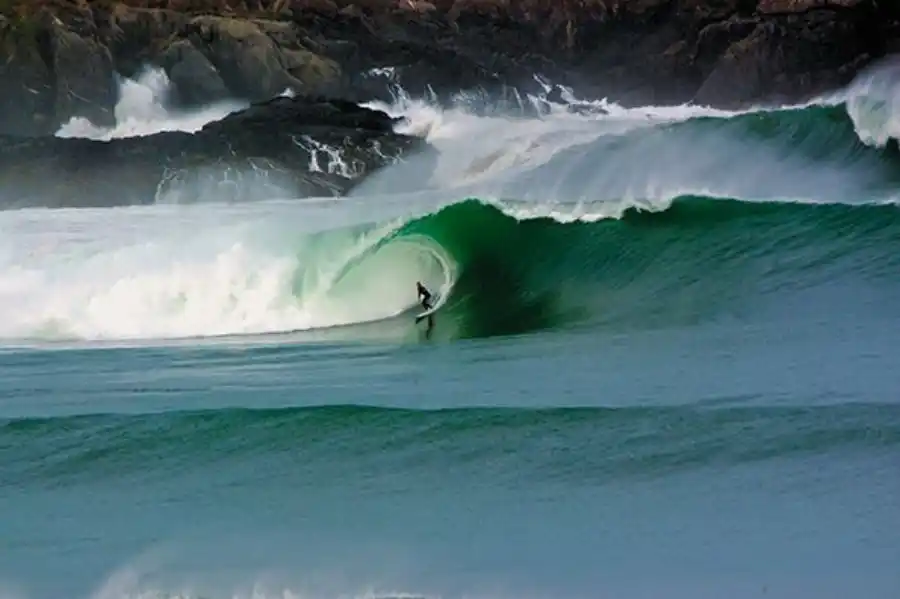
The wave at Mundaka, located in the Urdaibai Biosphere Reserve in the Basque Country, is the best left-hand wave in all of Europe. It is a barrel-shaped wave that breaks from the Mundaka sandbar and finishes at the nearby Laida Beach. On its best days, this wave can reach 4.5 meters in height and run close to 400 meters in length. Its quality comes from how powerfully it pushes into the Urdaibai estuary.
This wave is meant for advanced surfers, both local and international. It is very fast and powerful, breaking over a shallow, hard sandy bottom. Mundaka is one of the most outstanding surf spots in Spain, along with Rodiles in Asturias, Los Locos and Somo in Cantabria, Razo in A Coruña, Pantín in Ferrol, and El Palmar in Cádiz.
7. Uluwatu, Bali, Indonesia

The wave at Uluwatu in Bali is located on one of the best surfing beaches in the world. This beach lies in a paradisiacal setting, completely surrounded by tall cliffs. On one of these cliffs, you can visit a beautiful Hindu temple. Uluwatu is usually crowded with surfers, so the water often gets quite busy.
One advantage of this wave is that it has several peaks breaking in different directions, allowing multiple surfers to catch the same wave. Combined with the fact that sets come in regularly, there are always plenty of waves to surf. The first part of the wave is very steep, forming a large drop, and is only suitable for experienced surfers. The bottom, as in other beaches in the area, is coral.
8. Hossegor, Soorts-Hossegor, France
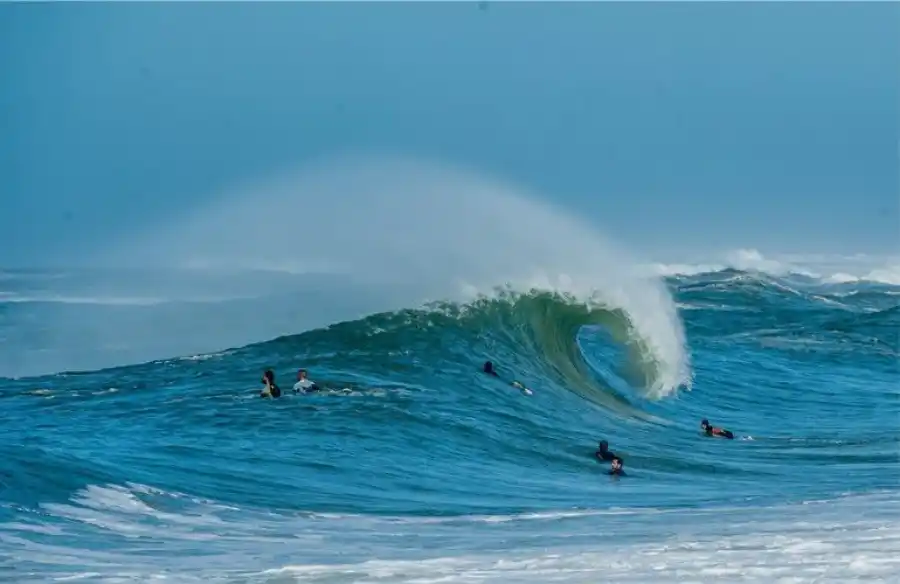
Hossegor is one of the best beaches for surfing in Europe. Located in the Landes region in southwestern France, it is considered the European surfing capital. The main beach at Hossegor features three main peaks: La Nord, La Gravière, and La Sud. At La Nord, surfers can enjoy a fantastic right-hand wave; La Gravière offers waves that break less predictably, typical of a beach break; and at La Sud, there is an interesting left-hand wave, smaller than the others.
Along its coastline, there are several world-class waves that differ greatly from one another. It is one of the most interesting places to improve your surfing skills, with different types of waves available on nearby beaches. This variety also allows surfers of all levels to come to the area and have fun.
9. Thulusdhoo, Malé, Maldives
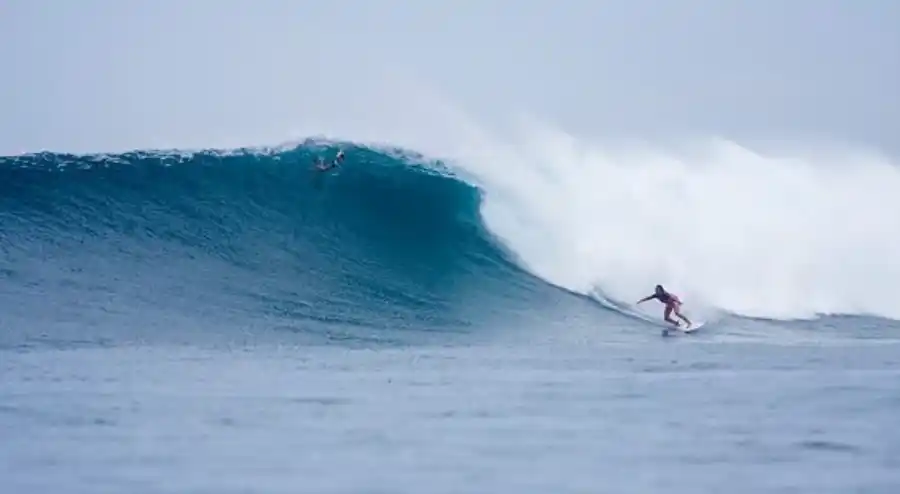
Within the Maldives, you can find many interesting surf spots. This archipelago of over 1,000 islands offers various types of waves: Cokes, a powerful right-hand wave with great barrels; Chickens, a fast left; Honkey’s, a strong left for experts; and Sultans, a powerful right. These are some of the most exciting waves to surf in the Maldives.
To reach these waves, you’ll need to travel by boat, as the distances are too long to paddle. The Maldives is an increasingly popular destination for surfers, offering such a variety of waves that surfers get the chance to enjoy a very complete surf trip.
10. Teahupoo, Tahiti

The wave at Teahupoo in Tahiti is the most powerful wave in the world, meaning it has recorded the greatest force. It is a huge, fast, steep left-hand barrel. This, combined with the unique coral reef at its base, makes it one of the most dangerous waves globally. The wave breaks nearly 1 kilometer offshore, so it’s common to see jet skis and boats towing the fearless surfers.
The wave’s name comes from the legend of an ancient Tahitian king. The name means “wall of skulls” and refers to the warrior’s habit of keeping the heads of his enemies as trophies. This story fits perfectly with the wave’s brutality and extreme danger.
These are just some of the best beaches and waves for surfing in the world — can you think of any others to add to the list?






0 Comments