

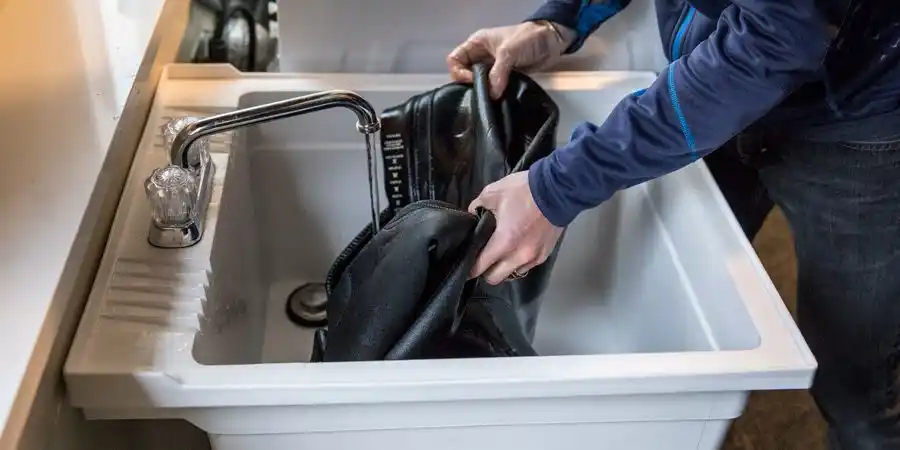
To keep your surfing gear in good condition for a long time, proper maintenance is essential. One of the most important tasks is washing your wetsuit after each use.
How to wash a wetsuit perfectly?
The wetsuit is a fundamental piece of equipment for surfers (although in certain seasons and regions, you can surf without one). Together with the board, they make up the main surfing gear needed to enjoy a session. However, many times we don’t give enough importance to its care, assuming that just rinsing it with fresh water after surfing is enough. That’s why, at our surf school, we have developed a method on how to wash your wetsuit properly to maximize its lifespan.
Keep in mind that the wetsuit is our great ally against cold water and is necessary to feel comfortable on the board. Buying a good wetsuit is a significant investment. Also, if you’re a regular surfer who travels worldwide visiting the best surfing beaches, you’ll likely need more than one type of wetsuit. Usually, surfers have a summer wetsuit (3/2 mm) and a winter wetsuit (5/4 or 4/3 mm).
To get the most out of your wetsuits and keep them in perfect condition and looking good for as long as possible, follow these maintenance tips.
1. Rise the wetsuit after each use
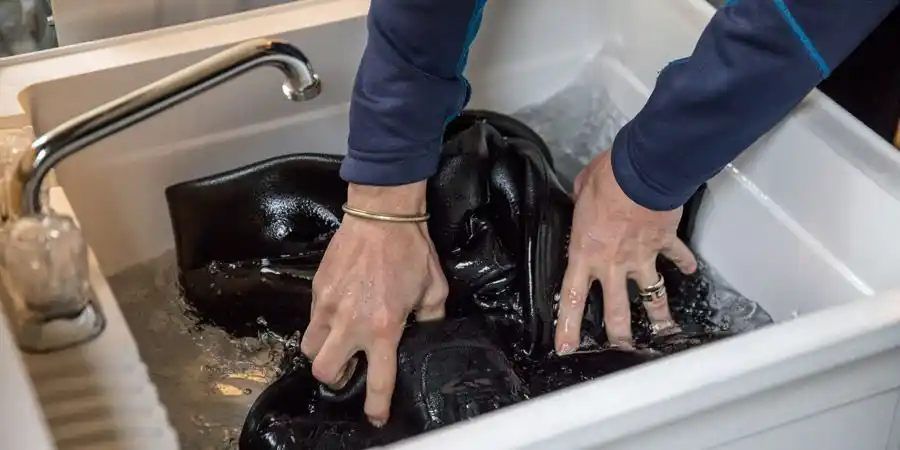
One of the most important things to do when washing a wetsuit is to rinse it with fresh water. After every time you surf in the sea, every time you use it, you should wash your wetsuit with fresh water, even if you’re going to use it multiple times in one day. Plus, you need to do it thoroughly, both inside and out. This is because many times people forget to wash the inside, and the salt damages the fabric and seams, especially if you hang it out in the sun. Another important point about washing wetsuits is the water temperature: it should be washed with cold water, as this helps preserve the seams better.
A quick tip to rinse it faster if you plan to surf again soon is to rinse it while you’re still wearing it, and once you take it off inside-out, rinse the inside.
At Biosurfcamp, after each surf class, we do this task collectively, sharing it among participants to make it more enjoyable. What we do is fill a couple of buckets and form a human chain. That way, wetsuits can be washed and hung to dry quickly.
2. Hang the wetsuit folded in half to dry
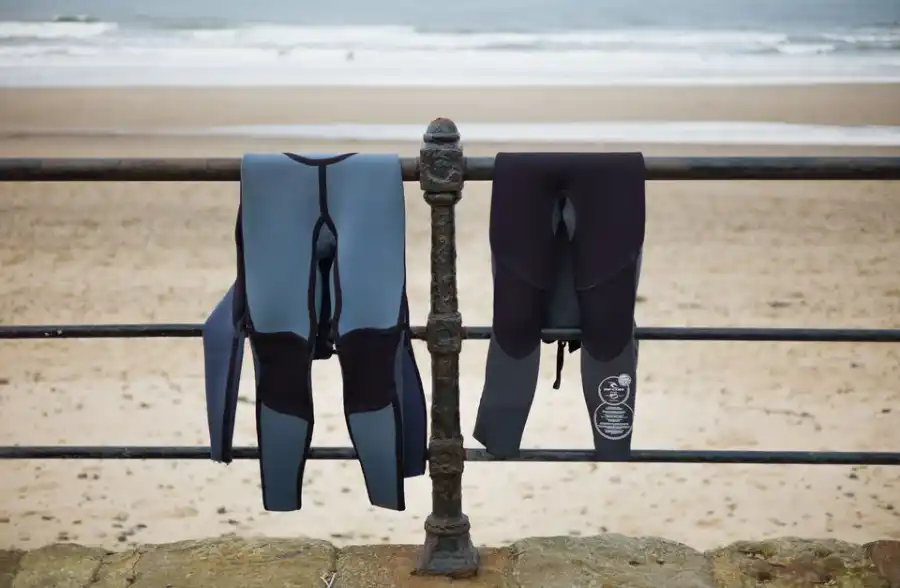
The first step to drying a wetsuit is to squeeze it from top to bottom (shoulders, chest, waist, and legs) to wring out the water. It’s very important not to twist the fabric, as this can stretch the seams. Once the largest layer of water has been removed, you can proceed to hang it up.
How you hang a wetsuit may seem unimportant, but it’s actually one of the main causes of damage. If you hang the wetsuit by the neck, you should use a very thick hanger because otherwise the weight will deform the top area and stretch it out. The best way to keep the wetsuit in perfect condition is to use a plastic or wooden hanger (metal hangers rust when wet) and hang it by the waist, folding the suit in half. This way, you avoid deformation.
It’s very important not to hang it in direct sunlight, as this damages the fabric faster. The best is to find a shaded, breezy spot and let it dry gradually. Above all, never use a dryer or iron, as they will damage the material.
3. Washing the wetsuit with soap
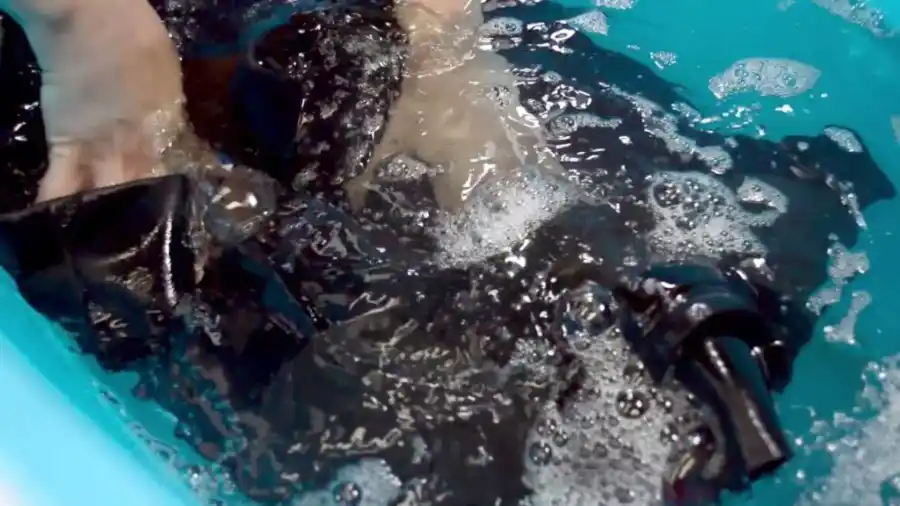
Often, we may not have soap available to wash our wetsuit, but it is recommended to use it whenever possible. You can use a neutral detergent or soap specifically for clothing. When washing the wetsuit with soap, be generous with the amount and scrub the entire suit and zippers, making sure to rinse thoroughly afterwards to remove all soap residue.
Although it takes more time, this helps remove salt better, which acts like an acid on the wetsuit and quickly damages it. If you usually surf several times a day, ideally you should wash it with soap each time. However, if you can’t, washing it with soap the last time will suffice.
4. Removing the wetsuit without stretching it

Putting on and taking off a wetsuit requires patience and is one of the most difficult tasks when you start surfing. It’s true that after surfing, being wet, it takes several minutes to completely remove it from your body. However, you should never force it off or pull it from the limbs. It’s important to be gentle because, although the fabric is strong, repeatedly pulling it will stretch it out in certain areas, letting water in during future sessions and causing it to wear out much sooner.
It’s also very important to use the bathroom before putting on the wetsuit, as urine can damage and tear the fabric, in addition to causing strong odors.
5. Can you wash a wetsuit in the washing machine?
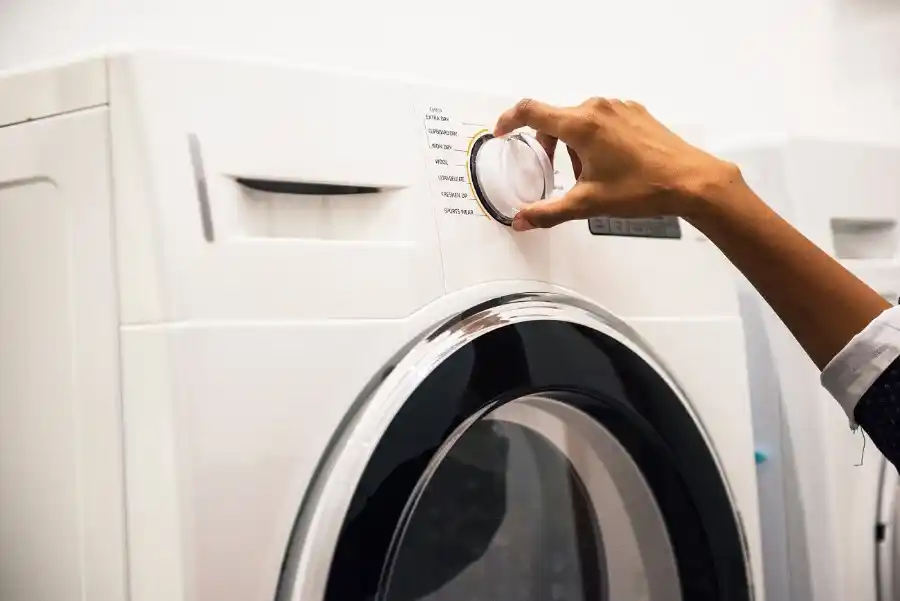
The first thing we need to know is whether you can wash a wetsuit in the washing machine. What’s really important is knowing how to wash a wetsuit properly in the machine. To do it correctly, a series of essential conditions must be met. They might sound like instructions for the Gremlins, but it’s very important to keep them in mind if we want to preserve the condition of our wetsuit:
- Don’t do it regularly
- Use cold water
- Select a short cycle without spinning
- Wash it alone, without detergent
Always remember that your surf session only ends after washing the wetsuit, when it’s rinsed with fresh water and hung to dry, as we do at our surf school. By following these tips on wetsuit care, you’ll see how it lasts much longer and you won’t need to replace it as often. Along with the surfboard, it’s one of the most important pieces of gear for surfers, so it deserves all the care we can give to keep it with us for as long as possible.
If you have any questions or want to know more about cleaning your wetsuit, contact us and we’ll help you with whatever you need.











0 Comments