

Waves, as we saw in our article “What are waves, what types exist, and how are they formed?”, are the vehicle surfers use to ride. Wave size is a very important topic among surfers, so measuring waves has become one of the main needs in this sport. Generally, when we look at a surf report, we talk about the height and size of the waves to see what conditions await us in the water. Internationally, wave height is measured in feet, with 1 foot equaling 30.48 centimeters.
However, it’s very difficult to go into the water with a measuring tape and determine the exact height of a wave, so different methods have been developed to measure waves. That’s why at Biosurfcamp we have created this article. Here, we will review the main ways to establish wave size in surfing.
Scientific or Bascom method for measuring waves
The scientific method, or Bascom method, is the most widely used today. It was created in the 1960s by the famous engineer and oceanographer Willard Newell Bascom. This method measures the wave height as the distance between the wave crest and the average sea level, as seen from the shore. It is the simplest and most rational way to establish wave size; however, it is difficult to determine the height from the shore if no one is surfing, as there is no reference point.
Hawaiian method for measuring waves in surfing
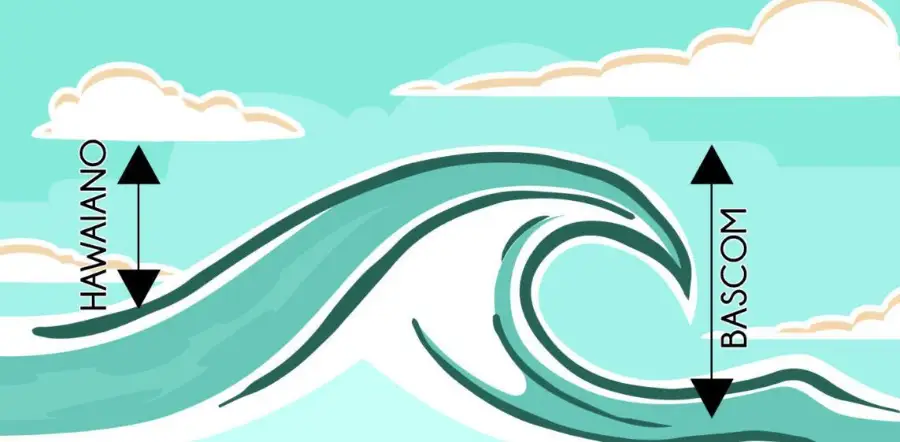
The Hawaiian method for measuring waves is a very particular way used in this part of the world, as well as in California and the Canary Islands. Unlike the previous method, this wave measurement method measures the wave from behind. It is an easier method to use while surfing, as you can use your own height as a reference to estimate the wave’s height.
Compared to the Bascom method, the wave size appears considerably reduced because when viewed from behind, the base of the wave is ignored. It could be said that this is like using the scientific method and dividing the measurement by two.
Surfable wave face method: Surfable face of the wave
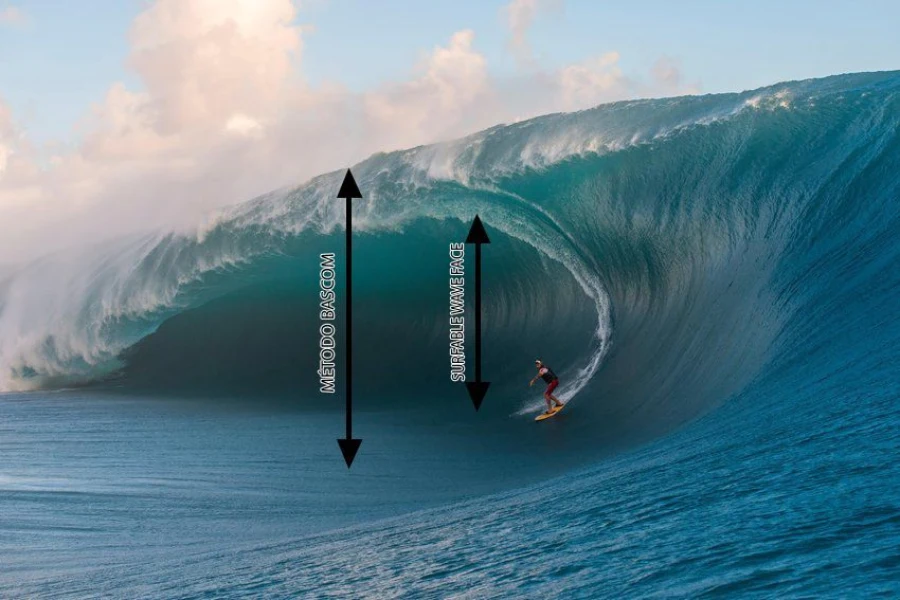
The “Surfable Wave Face” method for measuring wave height is increasingly used due to its popularity in some surfing festivals and competitions. As its name suggests, this system measures the surfable face of the wave. Using this method, the measured length is noticeably shorter than what the Bascom method would provide.
Traditional methods to measure waves
One of the most common ways to measure waves in a surf course is by relating the wave size to our own body. In these cases, terms like “head-high,” “chest-high,” or “waist-high” are used to estimate the wave size. This system isn’t exact since each person has a different height, but it serves as a simple reference for the waves being surfed.
Although it may seem trivial, an exact measurement is not necessary when starting to surf, as beginners surf smaller waves. What’s important is to develop good pop-up technique on the board and progressively seek larger waves.
Marine sensors for measuring waves
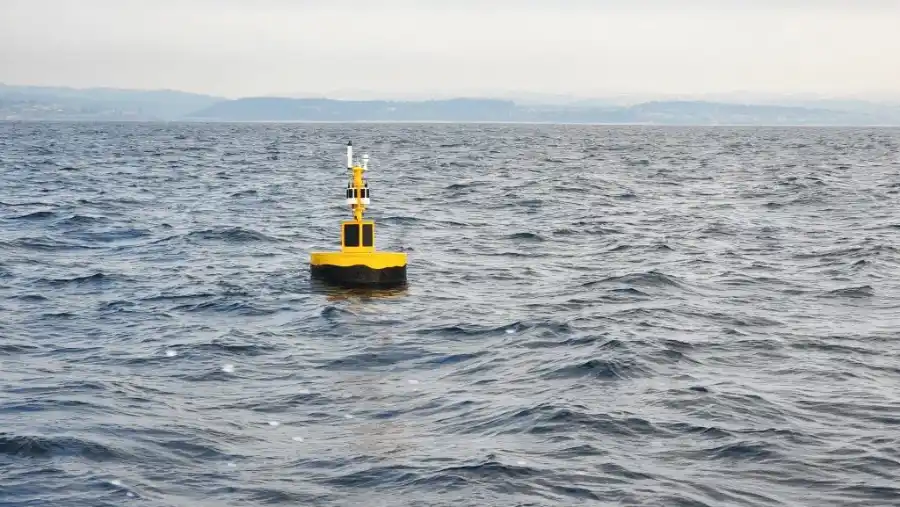
Marine sensors are buoys placed at various points in the sea that measure the height and direction of waves. This system is gaining much recognition because the measurements are much more accurate than other methods. However, this method measures waves far from the coast, so the waves that actually reach the beaches are often quite different from those measured at those points.
Conclusions to consider about wave size
Waves are moving waves that quickly change height as they approach the coast. Exact measurements are difficult to make, and ultimately, each wave is different from the previous one, and the decision to surf it must be made in a few seconds—especially with giant waves like those in Nazaré and its Guinness records.
It is true that we will hear many inexperienced people claiming to have surfed 3 or 4-meter waves, since the sensation from the top of a wave can give that impression. Also, we may be several meters above the base of the wave without that necessarily meaning that is the established size of the wave. In the end, the size depends on the frame of reference used.
And you? How do you measure the waves? Do you know any other method to calculate wave height? Which of the explained methods do you think is the best?







0 Comments