

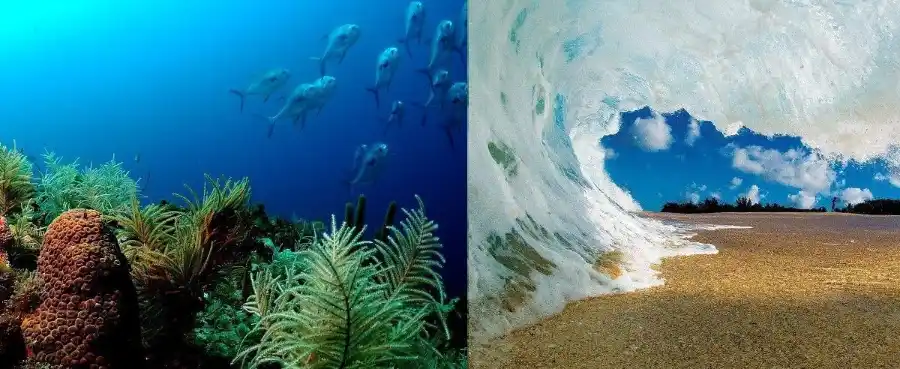
Both novice surfers, intermediate level surfers, and advanced surfers experience the same things. We have all had the experience of checking the forecast the day before and seeing that there will be perfect waves in the morning. You get up early at 7 a.m., prepare your board, wetsuit, and other surfing gear, arrive at the beach—and the waves are not there. You travel for hours to spend time on the beach, and for weeks there is no surfable sea.
From a surfer’s point of view, you can surf in rain and cold, dressed with a thicker or thinner wetsuit. But one of the necessary things for surfing is the waves. In the end, the quality of the waves depends on the coastal wind, the swell, the tide, the orientation of the beach itself, and a factor we sometimes don’t consider: the seabed.
The seabed is one of the most decisive factors when it comes to knowing the type of waves that will form. Around the coast of the land there are different types of waves to surf, but there are only a few types of seabeds. In this article we will analyze the different types of seabeds and their main advantages and disadvantages for surfing.
Aspects to know for surfing according to your level: Types of seabeds
If your surfing is very advanced, the tides with the most powerful waves, some of the famous beaches we mentioned in the 10 best beaches in the world to surf, or those you know with good breaks, will be the north on your compass. In this case you will be able to surf on both reef bottoms, rocky bottoms, and sandy bottoms.
If you have an intermediate level, you will have to take into account the height of the waves so that you feel comfortable, as well as the danger of the beach where you are going to surf. You will be able to surf without problems on sandy bottoms but will have to be careful on rocky bottoms and coral reef bottoms.
If you are a beginner you should look for a place where there is a surf school where you can learn the basics. The size of the waves will not be the most important thing, since with small waves you can better develop the technique of standing up on the surfboard, paddling, and beginning to turn. As a beginner, you will start surfing on sandy bottoms.
Now that you know which type of seabed best suits your level, let’s explain the different types of seabeds:
Rocky bottoms and reef bottoms
Reef bottoms and rocky bottoms are places where only the most advanced surfers or the bravest intermediate surfers surf. They are located in places where beautiful waves with very stylized shapes are produced.
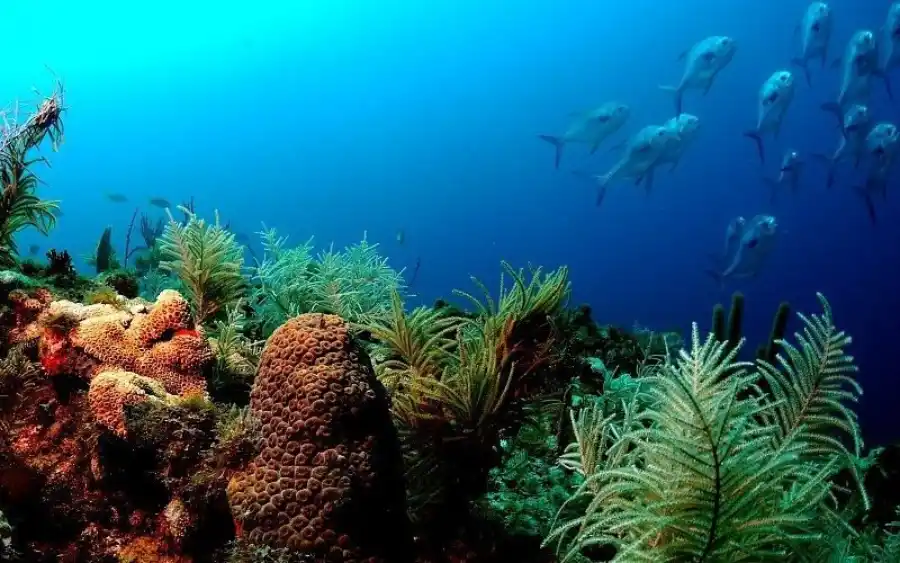
On one hand, we have reef bottoms. Reef bottoms are formed by corals. These are very solid living beings that grow very slowly, producing a great variability of seabeds. This means that whatever happens on the sea surface, the seabed remains still.
Another advantage of reef bottoms is that the waves and currents will be very similar. This means that the sets tend to break in the same place, with very long and sustained waves. The wind will be the main factor that determines the type of wave and its shape. It is common that in these paradisiacal places with reef bottoms, the direction of the wind, its intensity, and the swell are very carefully checked.
Additionally, coral seabed areas are marine zones with a lot of oxygen. This produces the crystal-clear blue color of these paradisiacal beaches. The reefs and the fish that inhabit them are of many colors. They form a beautiful visual set, which combined with surfing, make “a movie-like place with perfect waves.”
However, this is the most dangerous type of seabed, since corals are extremely hard and sharp organisms. Coral edges are sharp, unlike the round river rocks. Also, wounds caused in the sea get infected quickly, which usually leaves lifelong scars. It is highly recommended to be very confident in your surfing and very aware of the risks and dangers before trying this type of seabed, even though the waves may sometimes be too tempting.
On the other hand, rocky bottoms are quite similar to reef bottoms. The same main characteristics apply when determining the type of wave. Rocky bottoms are very stable, and the waves produced tend to be constant, with the same sets, peaks, and similar types of waves occurring regularly.

The problem with rocky bottoms, as with coral reefs, is that they tend to be very sharp and hard. This means that any fall is very dangerous, especially since they tend to have even less depth than reef bottoms. The only disadvantage compared to coral bottoms is that the water tends to be less oxygenated. This causes the water not to always be very clear, which can be a problem when not seeing the distribution of rocks on the seabed.
However, the advantage compared to coral bottoms is that rocky bottoms can be found on all the world’s coasts. It is not necessary to make a long trip to a paradisiacal beach to enjoy rocky bottoms, as you can find this type of seabed on all the coasts of the main surfing countries.
Sandy bottoms
Sandy bottoms are a very changeable and unstable seabed type. Strong tides, marine currents, and waves move the sand on the seabed, accumulating it in different parts without following any pattern. These bottoms are not solid, they are variable, and therefore, so are the waves. The term “variable” does not mean the waves are bad, but that the waves are irregular.
Many times, sandy-bottom waves can be excellent, as good as or better than rocky or reef-bottom waves. But what sandy bottoms mainly mean is that you will not catch more than three identical waves. Therefore, we can say that waves on sandy bottoms are variable. You have to take advantage of the good waves and make the most of them. Often, a surf session is like a lottery—you never know what you’ll get and you have to be ready for the good set.
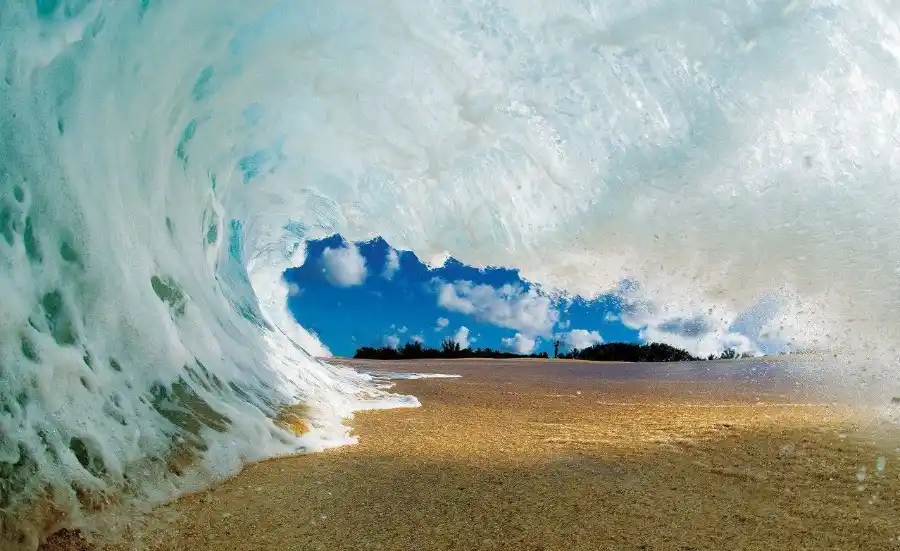
Changes in large sandbanks on the seabeds of beaches can have both positive and negative effects. Sometimes currents cause the sets at a beach to be better than before, and other times they make a certain beach less surfed.
However, beaches with sandy bottoms have one advantage, especially for inexperienced surfers who want to take their first surf course: the bottom is not sharp or as hard as rocky or reef bottoms. When falls occur on the bottom, contact with the sand is much softer and much less dangerous. It is true that you can get a hit if the wave pushes you forcefully against the bottom, but you will never get cut.
Tips if you’re looking for sandy-bottom beaches
When traveling to surf, especially if you are an inexperienced surfer looking for sandy bottoms, there is a risk of missing out on the best surfing conditions. However, there are tricks and small ways to diversify these risks and make sure to find waves suitable for our level.
The best trick when doing a surf trip is to choose a place that has different breaks with very different conditions but which are geographically close to each other. That is, have Plan A, Plan B, Plan C… the more plans and options we have, the better.
This way, we get what we want: to surf good waves without spending much time traveling from one place to another in search of them. Often, a surfer is unsure of the conditions at one beach and decides to drive an hour to another, only to end up returning to the first. Other times, the surfer decides to stay, and after the session finds out another surfer went to a different beach with better waves. In the end, a good strategic decision is to select a place like the one in the next photo:
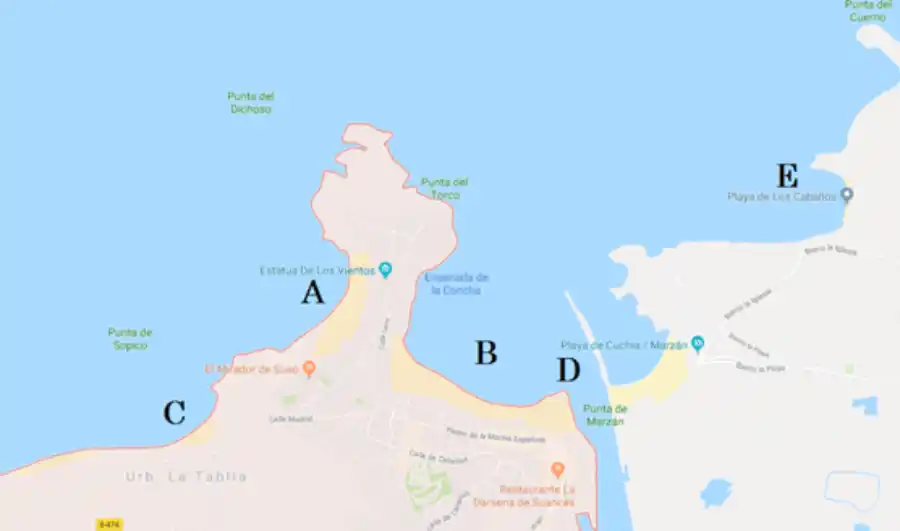
Suances is a town in Cantabria where you can surf any time of the year. As we see in the image, in a single geographic point, we have different options: Plan A, Plan B, Plan C, Plan D, and even Plan E. These beaches, with different orientations, types of waves, wind effects, and seabeds, are 10 minutes apart. Depending on the day and sea conditions, we will choose the one that best suits our level. It’s hard not to enjoy a good surf session—even on a sandy bottom!
In this article, we have presented the different beaches and breaks of Suances. If you want to know more about them, here is an interesting detailed article.









0 Comments